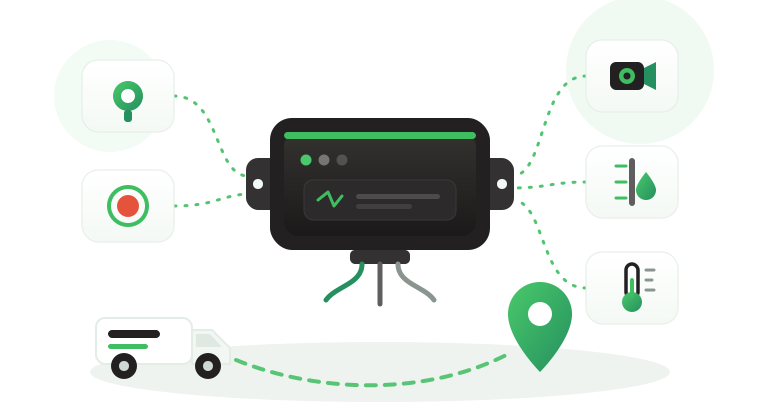


Buyers often ask for a GPS tracker with engine cut off before they ask anything else. A rental car leaves the city on an expired contract, a pickup starts at 2 a.m. with a copied key, and a financed vehicle stops making payments while still on the road. In each case the request sounds simple: stop the engine. The real question is how the cut-off is wired, who is allowed to trigger it, and under which conditions it is safe to use.
This article explains how tracker-based immobilization works inside a fleet vehicle and how to use it responsibly. It covers relays and the circuits they interrupt, driver access keys, a safe-use policy, the installer’s role, rollout steps, common mistakes, and where the Tracom ST100 fits.
What engine cut-off means on a GPS tracker
Engine cut-off, often called immobilization or fuel cut in Gulf markets, means the tracking device can prevent a vehicle from being operated by interrupting one of its electrical circuits. The tracker does not touch the engine mechanically. It switches a relay, and the relay opens or closes a circuit that the engine needs to start or run.
The term covers several different designs, and the difference matters for safety. Two concepts appear in most installations.
Starter circuit interrupt
A starter interrupt places the relay in the circuit that cranks the engine. When the relay is open, the starter motor does not turn, so the engine cannot be started. An engine that is already running is not affected by this circuit, which is why starter interrupts are commonly discussed as the more conservative design.
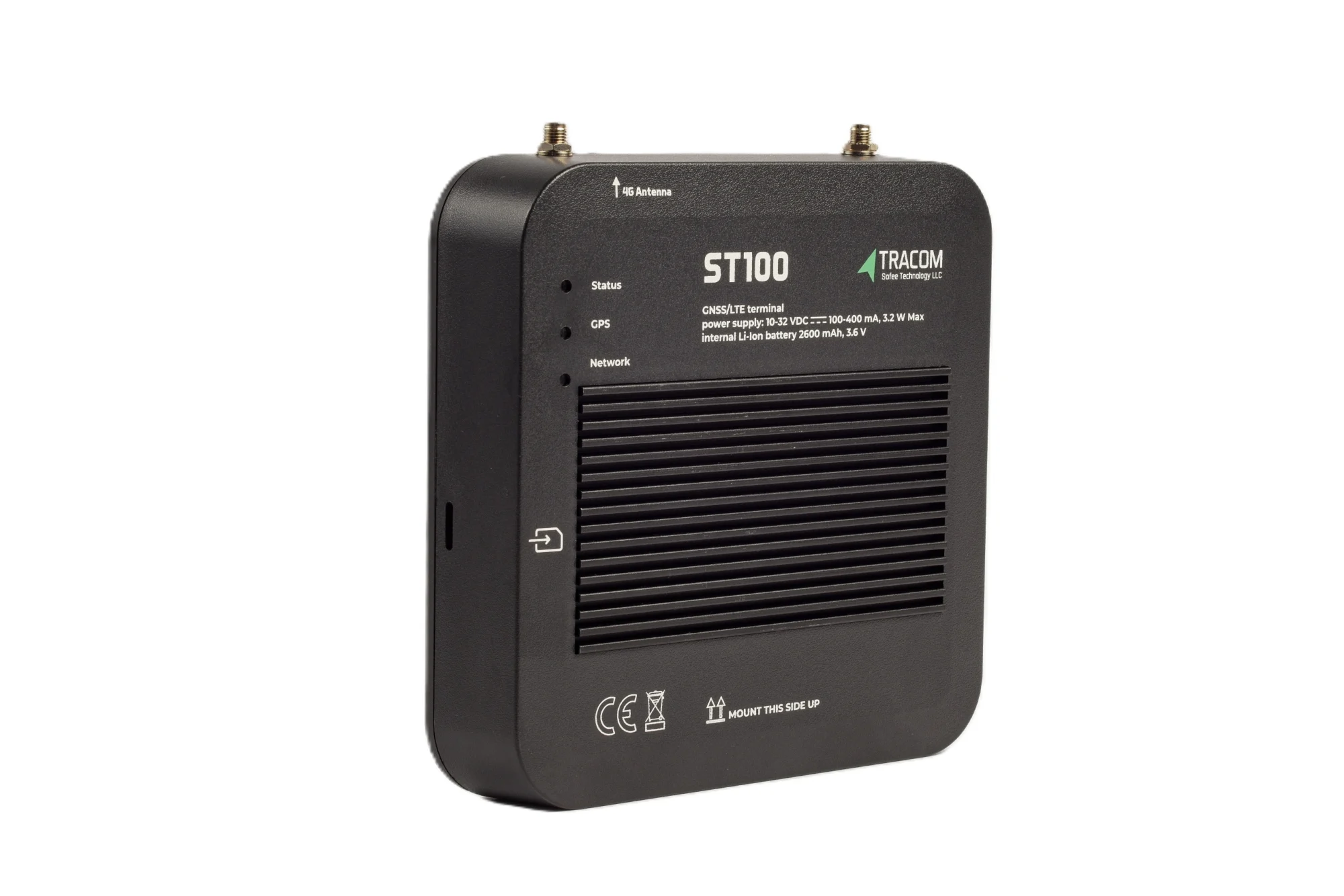
The tracking device behind every record
- GPS, GLONASS, SBAS, QZSS and AGPS positioning
- Location accuracy within a 2-meter radius
- 2G/3G/4G SIM support
- 12 digital, 4 analog and 5 AD inputs, 2 digital outputs
- 5 RS232 ports, USB, UART, 1-Wire and OBD II CAN
Fuel or ignition circuit interrupt
A fuel cut places the relay in the fuel pump circuit, and an ignition interrupt places it in an ignition-related circuit. Opening either one can stop an engine that is already running once fuel pressure or ignition is lost. On a moving vehicle, losing engine power can also reduce power steering and brake assist, so this design needs a strict policy on when it may be used.
| Approach | What it interrupts | Main risk | Design rule |
|---|---|---|---|
| Starter interrupt | Engine cranking | Vehicle already running stays usable | Pair with access keys and alerts |
| Fuel pump cut | Fuel supply | Engine stop in traffic | Define strict conditions in policy |
| Ignition interrupt | Ignition-related circuit | Engine stop in traffic | Follow the vehicle maker’s wiring guidance |
What the device does not decide
An immobilization event does not decide whether a vehicle is stolen, whether a contract has ended, or whether stopping a vehicle is justified. Tracom supplies the GPS device, in-vehicle rule logic, event data, and configuration. The fleet or its connected business software assigns the operational meaning and response, including who may authorize immobilization.
How the relay works in tracker immobilization
A tracking device is not built to carry the current of a starter or fuel pump circuit through its own electronics. In a typical design, a low-current control signal energizes a relay coil, and the relay contacts switch the vehicle circuit. The control signal is the decision, and the relay is the muscle.
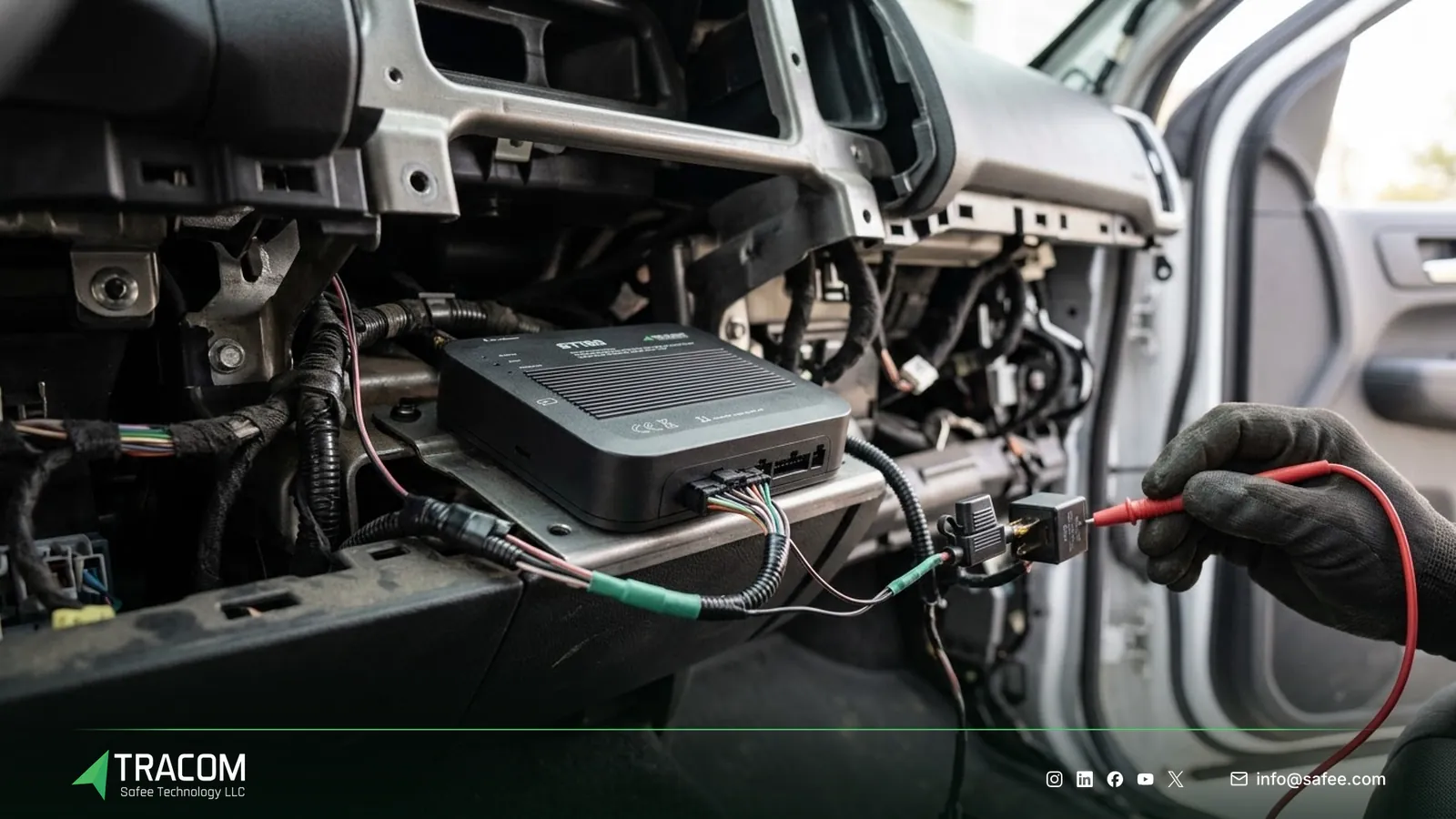
On the Tracom ST100, the immobilization wiring for each vehicle model, including how the relay is connected, the circuit it interrupts, and when immobilization engages, is agreed with the Tracom team before installation. This keeps the electrical design and the operating policy consistent across every vehicle group.
Relay type and circuit choice
Relay rating, wiring position, and fusing depend on the vehicle’s electrical system and the circuit chosen. A light vehicle and a 24-volt truck are not wired the same way, and the installer should follow the vehicle maker’s wiring guidance. The guide to GPS tracker wiring explains power, ground, ignition, and relay connections in more detail.
Why the wiring must be hidden and protected
A relay that is easy to find is easy to bypass. The same applies to the tracker itself. A hidden, well-secured installation makes bypassing deliberate and time-consuming, and the ST100 sends a tamper alert when someone attempts to remove or interfere with the device. The article on GPS tracker tamper alerts covers the common ways devices are attacked and how fleets respond.
Read also: Company Vehicle Tracking: Authorized Use, Drivers and Policy
Driver access keys and authorized operation
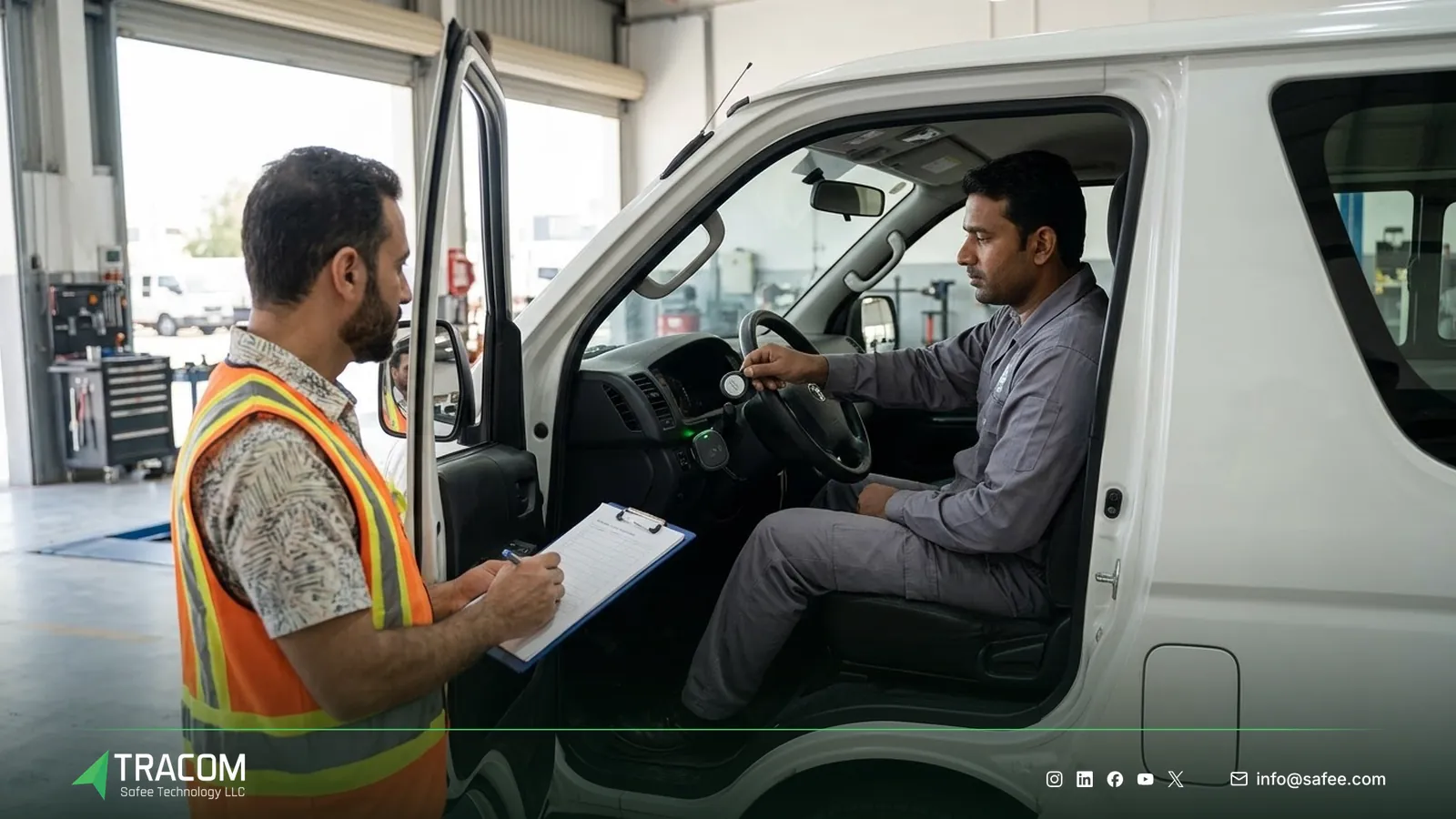
The published immobilization function on the ST100 works with driver access keys. The device supports up to 1,000 driver access keys, and with immobilization, only authorized drivers can operate the vehicle. A copied ignition key on its own is no longer enough to drive away.
This turns immobilization into everyday access control rather than an emergency measure. Each driver presents a key before the trip, the trip is linked to that driver, and a person without a valid key cannot use the vehicle normally. Tracom supplies a driver key reader for the ST100, and the reader type and fit for each vehicle are confirmed with the Tracom team.
Access keys also help outside security. Shared vehicles, pool cars, and night shifts produce cleaner records when every trip has a known driver. The guide to driver identification compares key and card approaches and explains how fleets manage key issue and return.
A safe-use policy for immobilization
Immobilization is a security control with road safety consequences. The policy should be written and approved before the first relay is installed, and it should be the same for every branch.

Who may authorize immobilization
Name the roles that can request and approve immobilization, such as a security manager or a duty manager, and require a second person for any action outside the normal access key flow. Record every request, approval, and outcome. A clear chain of authority protects the fleet and the person making the decision.
When immobilization should not be relied on
Write the policy so that no response depends on stopping a vehicle that is already moving in traffic. When a moving vehicle is confirmed stolen, the fleet follows its position, uses geofence and tamper alerts, and works with the authorities. The wider recovery process is covered in the guide to vehicle anti-theft GPS tracking.
Informing drivers and customers
Drivers should know that the vehicle uses access keys and immobilization, and what to do if a key fails. Rental, leasing, and finance companies also need to decide how they inform customers about tracking and immobilization in their contracts. Requirements differ by country and contract type, so take advice from your legal counsel before using immobilization on customer-held vehicles.
Engine cut-off by fleet type
The same function plays a different role in each business, which shapes the policy and the wiring.
- Rental fleets use access control and immobilization to limit unauthorized use between contracts, as covered in rental fleet GPS tracking.
- Car finance and leasing companies weigh immobilization against customer disclosure and their own recovery process, which the guide to GPS trackers for car finance explains.
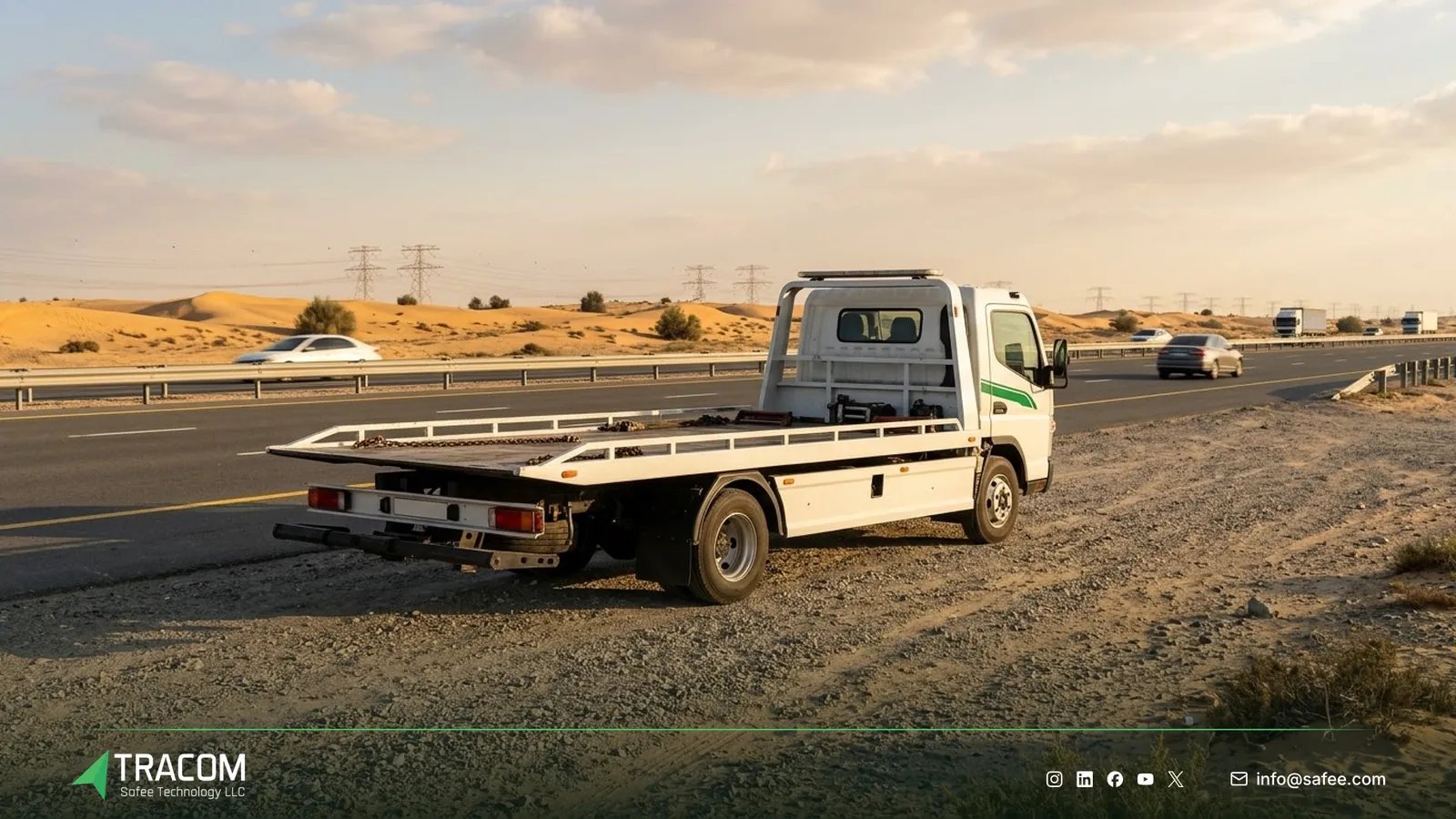
- Towing and roadside assistance fleets protect high-value trucks that often wait unattended at the roadside, as described in towing fleet tracking.
- Logistics and oil and gas fleets combine access keys with tamper alerts to keep vehicles and cargo in authorized hands on long routes.
Read also: GPS Tracker Placement: Where to Install It in Fleet Vehicles
Steps to deploy engine cut-off across a fleet
A staged rollout lets the fleet confirm the wiring and the policy on real vehicles before scaling.
- Write and approve the immobilization policy, including authorized roles, conditions, records, and driver and customer communication.
- List vehicle models and decide, with the device supplier and installer, which circuit each model will use.
- Plan driver access keys: who receives a key, how keys are issued and returned, and what happens when a driver leaves.
- Install the ST100, relay, and driver key reader on a pilot group, following the agreed wiring plan for each model.
- Test each pilot vehicle: an authorized key starts the vehicle, an unauthorized attempt is refused, and tamper alerts reach the right person.
- Push the configuration to the pilot group through the SCMS portal, and document one configuration version per vehicle group.
- Train drivers, supervisors, and the security team, then roll out by vehicle group after the pilot is signed off.
Share your vehicle models, risk scenarios, and immobilization policy, and request a device recommendation for a pilot wiring and access key plan.
Common engine cut-off mistakes
Most problems with immobilization come from rushed design and unclear ownership, not from the relay itself.
| Failure | Operational consequence |
|---|---|
| No written policy before installation | Different branches use immobilization in different ways |
| Relay fitted in a visible, standard spot | The circuit is bypassed in minutes |
| One wiring design for every model | Some vehicles fail to start or behave unpredictably |
| Access keys issued without a register | Former drivers can still operate vehicles |
| No test after installation | Faults appear only when a driver is stranded |
| Customers not informed in contracts | Disputes when a customer-held vehicle cannot start |
How Tracom supports engine cut-off projects
At Tracom, we supply the Tracom ST100, manufactured specifically to apply access and security rules inside the vehicle, so authorized operation, tamper awareness, and event records do not depend on a constant network connection. The capabilities that support an immobilization project are:
- Up to 1,000 driver access keys, with immobilization so only authorized drivers can operate the vehicle.
- 12 digital inputs, 4 analog inputs, 5 AD inputs, 2 pulse counters, 5 RS232 ports, USB, UART, and a 1-wire interface, with the connection of each accessory agreed with the Tracom team.
- A tamper alert when someone attempts to remove or interfere with the device, and a panic alert that drivers can send in critical situations.
- Up to 4,000 geofences with time-based speed limits, and voice alerts for drivers.
- Second-by-second data, rules applied without internet, and storage of up to one week of data on the device during network outages.
- Central configuration through the SCMS portal with XML files, OTA updates, and SMS commands.
Tracom also supplies a driver key reader and a panic button for the ST100, with type and fit confirmed with the Tracom team. The ST100 works with third-party tracking platforms through a documented protocol that Tracom shares with partners, so service providers and resellers can add it to the platform they already run. You can review the capabilities on the features page and see remote configuration on the services page. The relay, circuit, and immobilization behavior for each vehicle model should be confirmed during solution design.
Conclusion
Engine cut-off is useful when it is designed as access control with a written policy, not as an emergency stop for vehicles already on the road. The right circuit, a hidden installation, a key register, and clear authority matter more than the cut-off itself.
Tracom provides the ST100, driver key readers, and remote configuration for fleets, rental and finance companies, telematics service providers, resellers, and installers across the GCC and worldwide. Share your vehicle models, driver numbers, and immobilization policy, and talk to a Tracom specialist to receive a practical device and wiring recommendation.
Frequently asked questions
How does a GPS tracker with engine cut-off work?
It uses a relay. The tracking device controls the relay, and the relay interrupts a vehicle circuit, such as the starter or fuel pump circuit. On the ST100, immobilization works with driver access keys, and the wiring for each vehicle model is agreed with the Tracom team before installation.
What is the difference between a starter cut and a fuel cut?
A starter cut prevents the engine from cranking, so a stopped vehicle cannot be started, while a running engine is not affected by that circuit. A fuel cut interrupts the fuel pump circuit and can stop a running engine. Because of that, fuel cut designs need stricter conditions in the fleet’s policy.
Is it safe to cut the engine of a moving vehicle?
No. Losing engine power in traffic can reduce steering and braking assistance and put the driver and other road users at risk. A fleet’s response to a stolen or misused vehicle should not depend on stopping it while it moves. Follow its position, use alerts, and work with the authorities.
Can the ST100 stop unauthorized drivers from using a vehicle?
Yes. The ST100 supports up to 1,000 driver access keys, and with immobilization only authorized drivers can operate the vehicle. A person without a valid key cannot use it normally. Tracom supplies a driver key reader, and the reader type and wiring for each model are confirmed with the Tracom team.
Does Tracom decide when a vehicle should be immobilized?
No. Tracom supplies the ST100, the driver key reader, in-vehicle rules, event data, and configuration. Your organization decides who may authorize immobilization, under which conditions, how drivers and customers are informed, and how incidents are handled with the authorities. Take legal advice before using immobilization on customer-held vehicles.
Choose the right tracker for every vehicle
Tell us your vehicle types and what you need to monitor. A Tracom device specialist will reply by email with a recommended ST100 setup and accessories.
Usually replies within one business day • No sales spam
Your details are used only to respond to your request. Privacy Policy