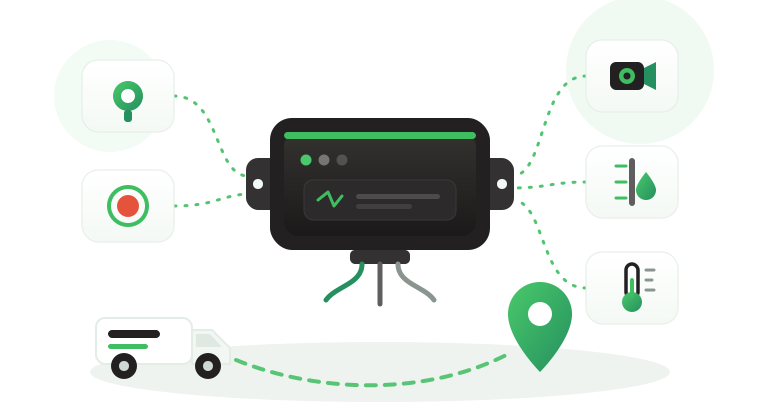


Ask for an approved tracking device in Saudi Arabia and you will hear “yes” from almost every supplier. A classified ad promises a device approved by the telecom regulator and linked to the transport authority, and a quotation says “certified” without naming a certificate. The problem is not a lack of approved devices. It is that one word covers several different checks, made by different authorities, on different things.
This article explains what buyers usually mean by an approved tracking device in Saudi Arabia, and which authority deals with which part of the question. It covers the roles of the three authorities, the difference between approving a device and linking a service, the questions and documents to request from any supplier, and where the Tracom ST100 fits. It is not legal advice: check every requirement against the current text on the official portal.
What “approved tracking device” means in Saudi Arabia
A GPS tracking device is a radio product with a cellular modem, an imported product cleared through customs, and, once installed, part of a service that may report vehicle data to a client or an authority. Each role has its own rules and authority, so “approved” only means something when the buyer knows which one is claimed.
Three different meanings behind one word
When buyers and sellers in Saudi Arabia say a device is approved, they usually mean one of three things.
- The device model has been assessed against the technical specifications of the telecom regulator, and a certificate of conformity exists for it.
- The tracking service, run by a licensed or qualified provider, can link vehicle data to a platform of the transport authority for a regulated activity.
- The product was imported and registered through the national product conformity process.
These are separate checks. A device can hold a telecom certificate and still not be linked to any transport platform.
What an approval does not tell you
A certificate of conformity for a device model does not say that your fleet meets the rules for its activity, that a given installation is correct, or that data reaches the right platform. Tracom supplies the GPS device, local rule logic, event data, and configuration layer. The fleet, its tracking service provider, or its connected business software decides how that data is used and reported.
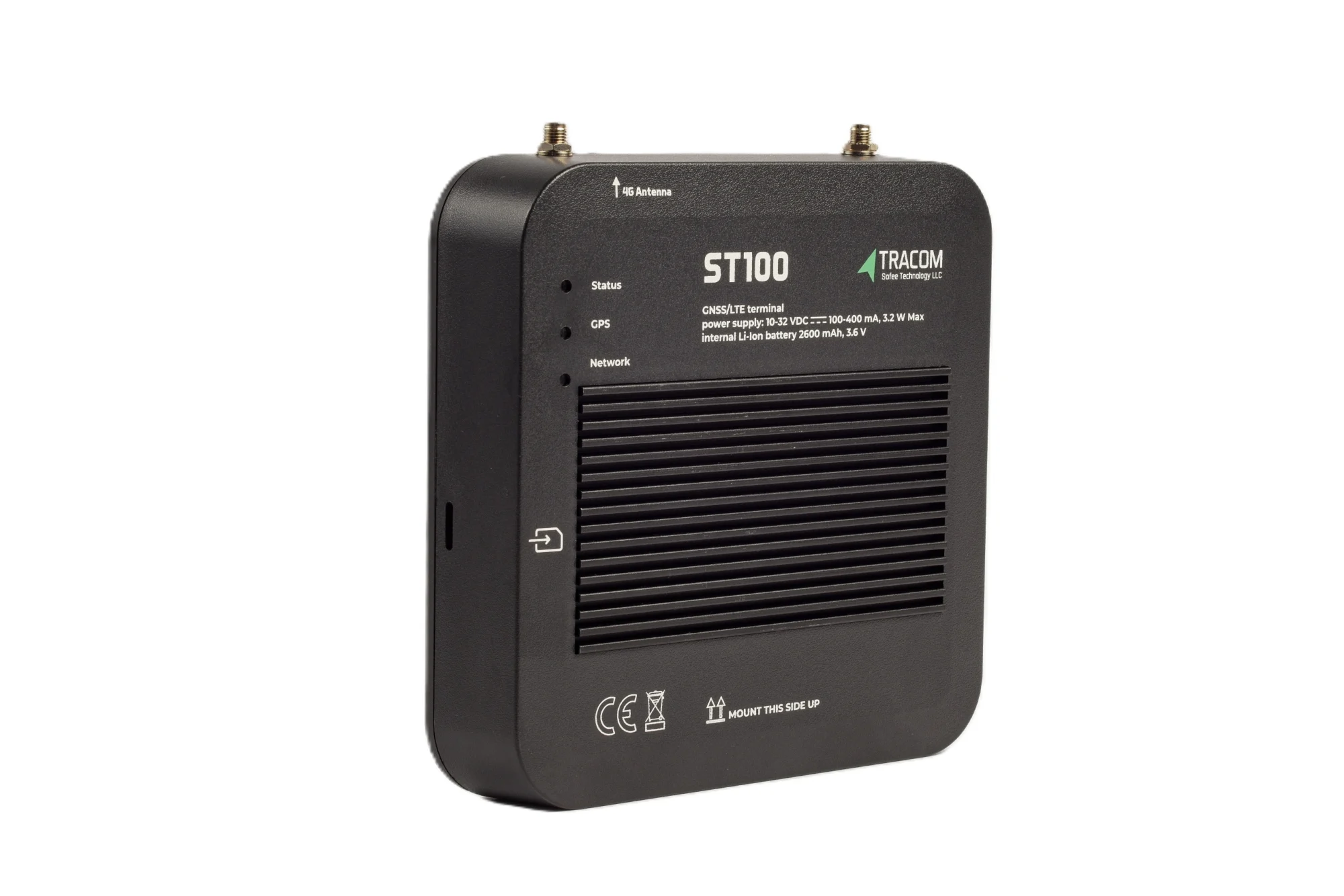
The tracking device behind every record
- GPS, GLONASS, SBAS, QZSS and AGPS positioning
- Location accuracy within a 2-meter radius
- 2G/3G/4G SIM support
- 12 digital, 4 analog and 5 AD inputs, 2 digital outputs
- 5 RS232 ports, USB, UART, 1-Wire and OBD II CAN
The authorities involved and what each one does
Three official bodies appear most often in Saudi tracking purchases. The summary below describes their roles; rules change, so read the current text before relying on any point.

| Authority | Role for tracking buyers | What to ask the supplier |
|---|---|---|
| CST (telecom regulator) | Device conformity with its technical specifications | Certificate of conformity for the exact model |
| TGA (transport authority) | Activity licensing, platforms, and qualified providers | Who links the data, and on which basis |
| SASO (standards body) | Product registration and conformity for imports | How the shipment was registered and cleared |
The telecom regulator (CST) and device conformity
The Communications, Space and Technology Commission (CST) is the regulator for telecom and IT equipment, and it checks devices for conformity with its own technical specifications.
CST offers a device approval service open to parties inside and outside the Kingdom, a certificate of conformity for devices it has approved, and registration and clearance services for importers. It also runs two public checks that matter to buyers: a query service for approved devices and a service to verify whether a certificate of conformity was issued by CST.
The transport authority (TGA) and data linking
The Transport General Authority (TGA) licenses land transport activities and runs the electronic platforms used to regulate them. In February 2019, the authority, then called the Public Transport Authority, announced that trucks would have to use tracking and weight-monitoring devices from April 2019. Wasl is one of the authority’s electronic platforms for land transport, and a service launched on Wasl in 2020 with the food and drug regulator tracks temperature and humidity in vehicles carrying food and medicine.
TGA also publishes directories of licensed and qualified companies, including technical equipment service providers for some activities. For a buyer, this means the linking question is usually about the service provider and its platform, and the provider’s standing should be checked in those directories, not inferred from a sticker on the device.
Standards and product conformity (SASO)
The Saudi Standards, Metrology and Quality Organization (SASO) sets technical regulations and runs Saber, the electronic platform where suppliers register products and obtain shipment conformity certificates that support customs clearance. Ask the importer how the devices were registered and cleared.
Read also: GPS Tracking in the UAE: A Practical Guide for Fleets
Device approval versus platform linking
Most confusion comes from treating two questions as one: whether the hardware model may be sold and used in the Kingdom, and whether the tracking service can deliver data where your activity requires it.
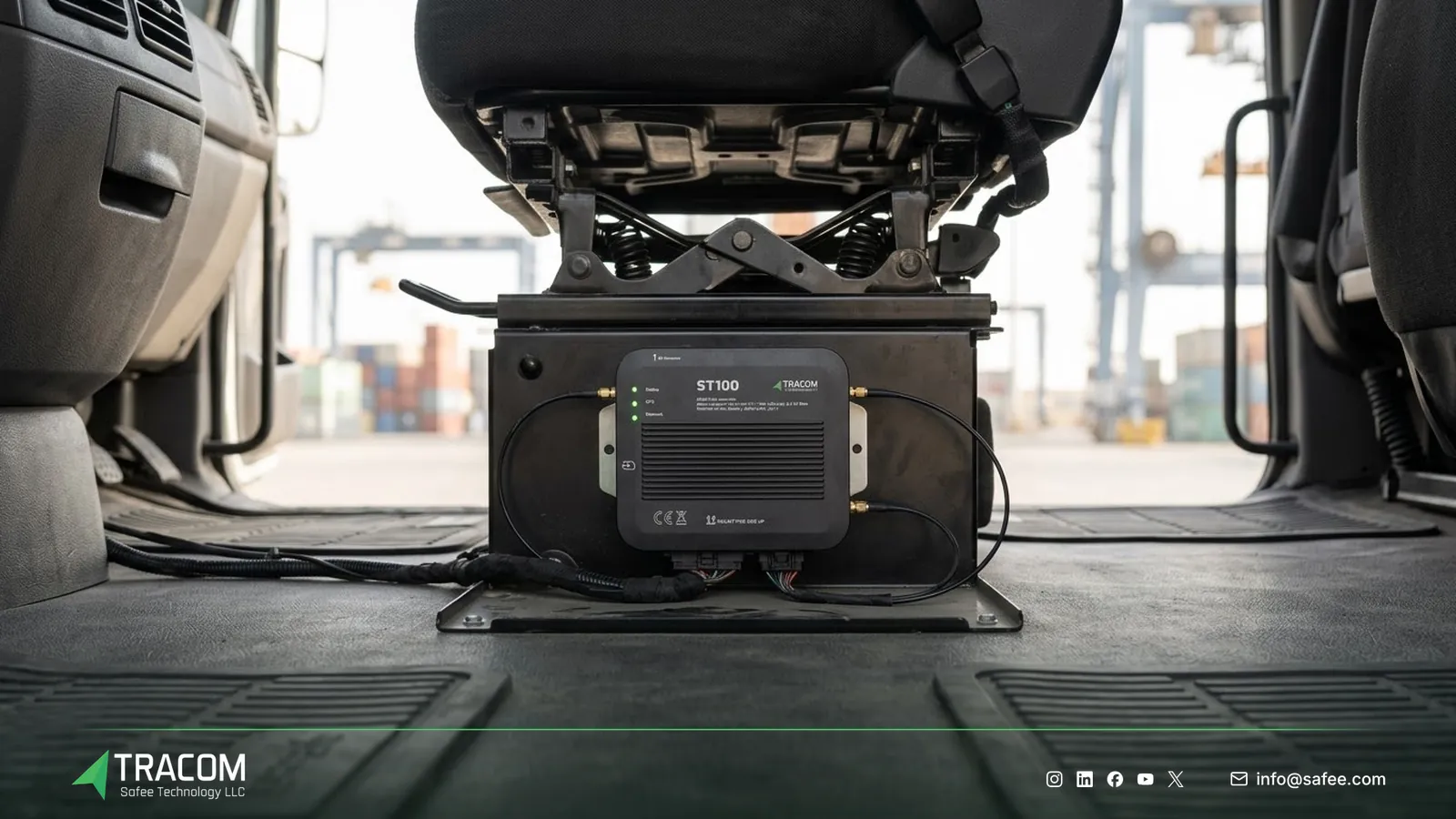
Where the hardware stops and the service begins
The device collects position, speed, events, and sensor inputs and sends them to a tracking platform. Dashboards, reports, and any link to an official platform run on the platform side. A device that sends clean, complete data makes linking easier, but the device alone does not create the link.
The cellular side matters too. A certificate describes the device as tested, but the device must also keep connecting when operators retire older networks, which the guide to the 2G and 3G shutdown and GPS trackers explains in detail.
Why “linked to Wasl” is a service question
When a seller says a device is “linked to Wasl”, ask who performs the linking, through which platform, and under which TGA qualification or listing. If the answer names only the device, keep asking. For broader planning across Saudi regions and sectors, the guide to GPS tracking in Saudi Arabia covers operating conditions and deployment.
Questions to ask any supplier
Ask these questions in writing, in the same form, to every bidder. The full list of technical questions for an RFQ is in the fleet tracking features checklist.
Questions about the device
- Which exact model and hardware version will be delivered, and does the certificate name that model?
- Which authority issued each certificate, under which number, and with which validity date?
- Which cellular network generations does the device support, and which SIM will it use?
- Who imported the devices, and how were they registered and cleared?
Questions about linking and the service
- Who links the tracking data to any official platform, and is that party listed by the relevant authority?
- Which tracking platform receives the data, and who owns the contract with that platform?
- Which data fields does your activity need to report, and which ones does the device produce?
- What happens to the link if you change platform or service provider later?
Questions about installation and support
- Who installs the devices, and how is each installation tested and recorded?
- How are configuration changes, firmware updates, and faulty units handled?
- Who answers when an authority, a client, or an auditor asks for documents?
Documents to request and how to verify them
Treat every claim as unverified until you have checked it on the issuing authority’s own portal.
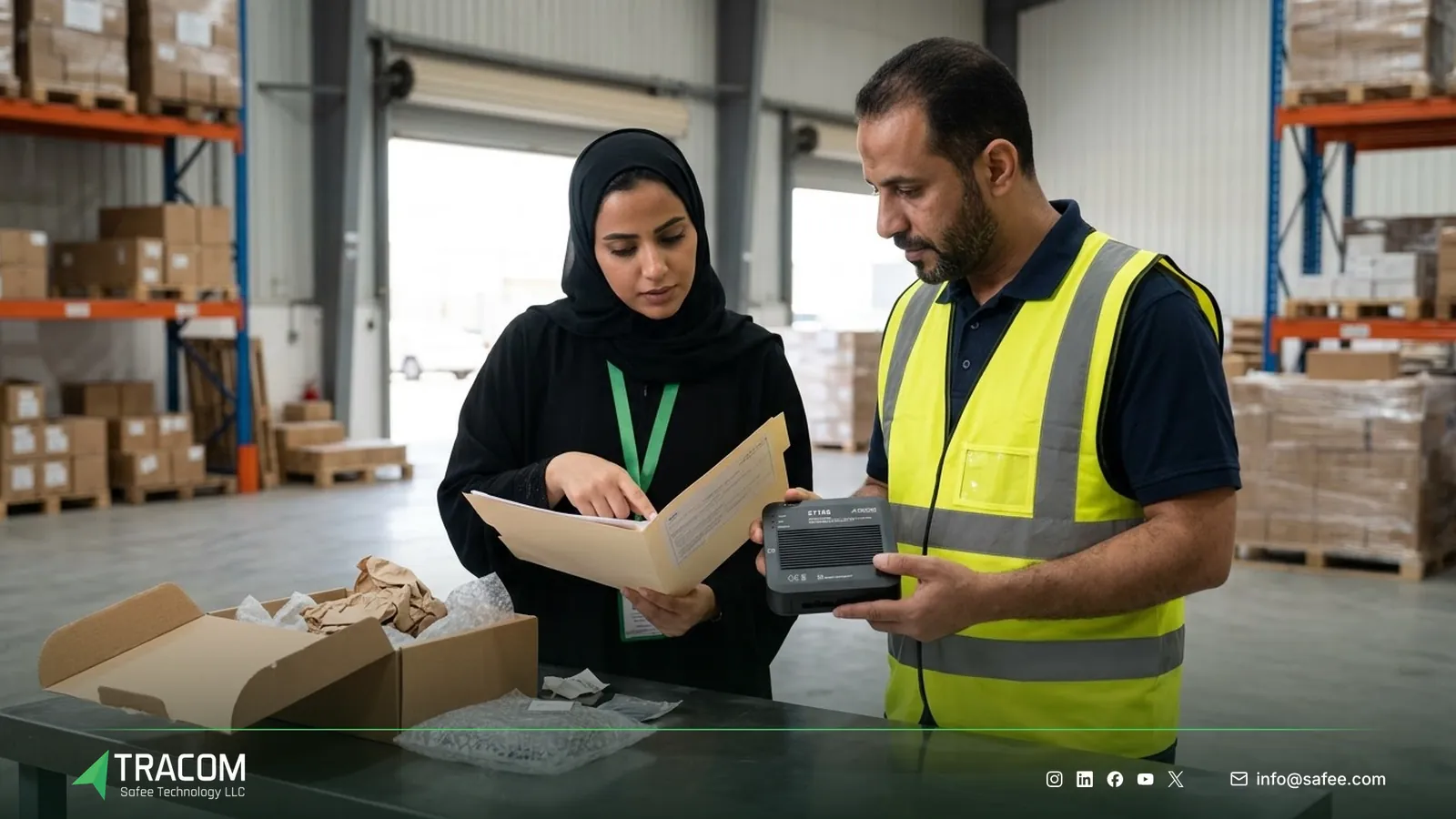
- Write down the activity, vehicle types, and regions the devices will serve, so every supplier answers the same question.
- Ask for the exact model name and hardware version of the device that will be delivered.
- Request the CST certificate of conformity for that model, with its number and dates.
- Verify the certificate through CST’s own verification service, and check the model in its approved devices query.
- Ask the service provider, in writing, who performs any linking to TGA platforms and on which basis, then check the TGA directories.
- Ask the importer for the registration and clearance details of the shipment.
- Compare the model name on the delivered units with the name on every document before installation starts.
- Keep the file with the fleet’s records and repeat the checks when certificates near their expiry date.
Share your activity, vehicle types, and platform with us, and talk to a Tracom specialist about the hardware side of your project.
Read also: How to Evaluate a GPS Tracker Manufacturer Before a Tender
Common mistakes when buying an “approved” device
Most problems appear months after purchase, when someone asks a question nobody asked at the start.
| Mistake | Operational consequence |
|---|---|
| Accepting “approved” without a named certificate | Nobody can show proof when an auditor asks |
| Checking the brand, not the exact model | The certificate covers a different device |
| Assuming the device creates the Wasl link | Vehicles report to no official platform |
| Ignoring the service provider’s listing | Linking stops when the provider loses standing |
| Buying for one network generation only | Devices need replacement when networks change |
| No documents file per supplier | Every tender restarts the same search |
Resellers and installers face these questions on behalf of their customers, so the guide for a GPS tracker reseller covers how to prepare documents before selling. Public buyers often write the same points into tender terms, as the guide to government fleet tracking shows.
How Tracom supports Saudi buyers
At Tracom, we supply tracking hardware to fleets, telematics service providers, resellers and installers, and for government and oil and gas tenders. We do not claim any approval or official platform link in this article. Documents available for a specific model and project are a written question for our team, and each answer should be checked on the issuing authority’s portal.
What we can describe here is the device. The Tracom ST100 is an in-vehicle intelligence system that applies rules inside the vehicle without waiting for the cloud:
- GPS, GLONASS, SBAS, QZSS, and AGPS receivers, with location accuracy within a 2-meter radius.
- Support for 2G/3G/4G SIM cards.
- Second-by-second data, and up to one week of data stored on the device when the network drops.
- Up to 4,000 geofences with time-based speed limits, and up to 1,000 driver access keys with immobilization.
- Tamper alert, panic alert, and voice alerts for over-speeding, harsh events, and seat belt violations.
- Configuration through the SCMS portal with XML and KML/KMLO files, OTA updates, and SMS commands.
The ST100 works with third-party tracking platforms through a documented protocol that we share with partners, so the platform and the service provider you choose stay your decision. We also supply the Tracom M1N MDVR and accessories such as driver key readers, panic buttons, fuel level sensors, and temperature sensors, with type and fit confirmed with our team. Documents, platform, and accessories for your activity should be confirmed during solution design. You can review the features and the remote configuration services, then request a device recommendation for your fleet or your customers.
Conclusion
In Saudi Arabia, “approved” is a useful word only when it names the authority, the model, and the document. Device conformity is checked with CST, activity licensing and data linking sit with TGA and the providers it lists, and product registration runs through SASO. Buyers comparing Saudi and UAE rules can read the parallel guide to an approved GPS tracker in the UAE.
Tracom supplies the ST100, the M1N MDVR, and the accessories around them, and works with fleets, resellers, and integrators on the hardware side of each project. Share your activity, vehicle types, regions, and tracking platform, and talk to a Tracom specialist to receive a hardware recommendation and the list of documents to request.
Frequently asked questions
What does an approved tracking device mean in Saudi Arabia?
It usually means one of three things: a CST certificate of conformity for the device model, a tracking service that a qualified provider links to a TGA platform, or a product registered through SASO’s import process. Ask the seller which one is meant, and for the document behind it.
How can I check a CST certificate for a tracker?
Ask for the exact model name and certificate number. Then use CST’s own services: the approved devices query and the verification of certificate of conformity. Confirm that the model on the certificate matches the model on the delivered units, and note any validity date.
Is a tracking device required for my vehicles?
That depends on your activity, vehicle category, and contracts, so this article cannot give a yes or no answer. The transport authority has set tracking requirements for some activities, and rules change. Check the current text on the TGA portal for your activity, and ask your legal advisor.
Does a device link to Wasl by itself?
No. A tracking device sends data to a tracking platform, and any link to an official platform runs through the service provider and its platform. Ask who performs the linking, on which basis, and whether that provider appears in the relevant TGA directory.
Does Tracom confirm approvals or compliance for my fleet?
No. Tracom supplies tracking hardware, in-vehicle rules, event data, and configuration tools. Your organization and its service provider remain responsible for confirming which rules apply, which documents are needed, and how data is reported. Questions about documents for a specific model are answered in writing by the Tracom team.
Sources
- CST: Clearance and equipment approval services
- Saudi Press Agency: Public Transport Authority requires trucks to install tracking devices from April 2019 (Arabic)
- Transport General Authority: official website
- Transport General Authority: Licensed companies
- SFDA: Temperature and humidity tracking service for food and drug vehicles via Wasl (Arabic)
- SASO: Product registration and consignment certificates on the Saber platform
Choose the right tracker for every vehicle
Tell us your vehicle types and what you need to monitor. A Tracom device specialist will reply by email with a recommended ST100 setup and accessories.
Usually replies within one business day • No sales spam
Your details are used only to respond to your request. Privacy Policy