
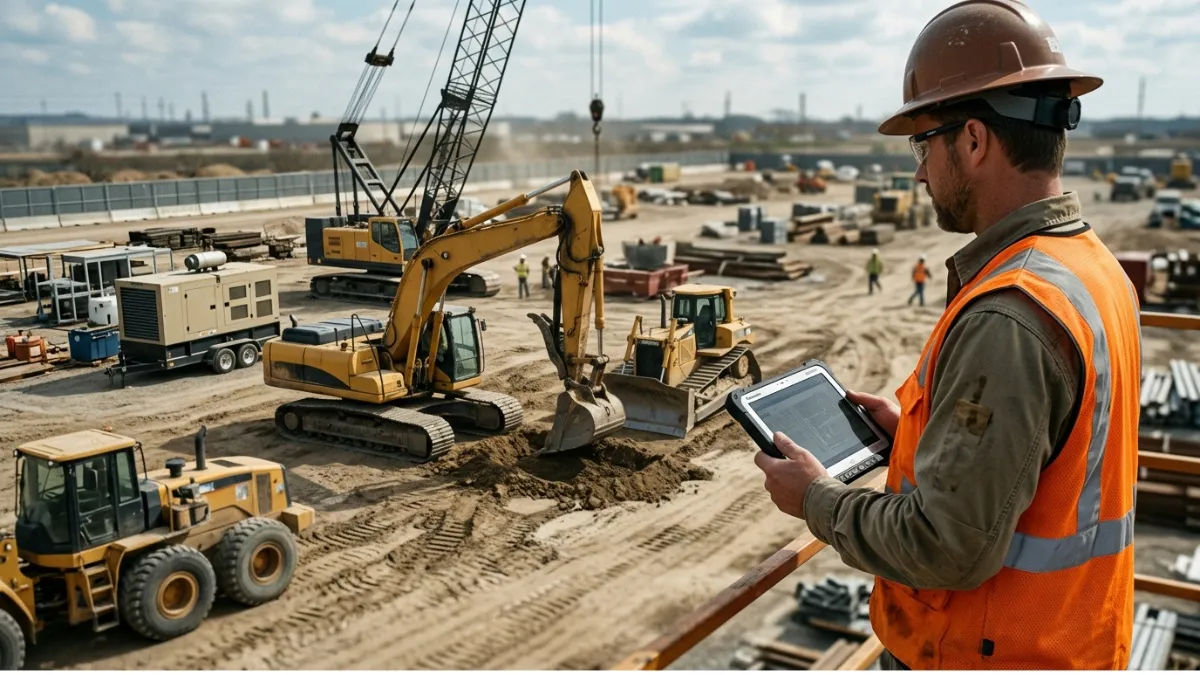
A machine does not need to move far to create a serious problem. One excavator leaves a job site after hours. A generator sits idle while another team rents extra power. A compressor is moved to another work zone without a clear record. A high-value attachment disappears between the yard and the job site. For construction firms, mining operators, rental companies, and industrial equipment managers in the GCC and worldwide, this is not a tracking problem only. It is a security, utilization, maintenance, and accountability problem. At Tracom, we help teams turn equipment location data into daily operational control, not just dots on a map.
This guide explains how to choose and use an equipment GPS tracker for heavy assets that operate across job sites, yards, mines, industrial facilities, ports, rental locations, and remote projects. You will see what makes equipment tracking different from vehicle tracking, which device setup fits each asset type, how geofencing and anti-theft alerts reduce risk, and how engine-hour and utilization data support better maintenance and fleet decisions.
What is an equipment GPS tracker?
An equipment GPS tracker is a tracking device used to monitor the location, movement, status, and usage of heavy machinery and non-road assets. In practical terms, it helps your team know where each asset is, whether it is inside the right zone, when it moved, how long it operated, and whether an alert needs action.
The key point is that heavy equipment GPS tracking is not the same as tracking company cars. Equipment may sit for days, move slowly across a site, run without traveling much distance, and operate in dust, heat, vibration, rain, remote coverage areas, or unsecured yards. That means the tracker must be selected for the asset, the environment, and the business workflow.
For a broader explanation of how commercial tracking hardware collects location, events, and vehicle or machine signals, see our guide to how a GPS fleet tracking device works.
Why does heavy equipment GPS tracking need a different setup?
The biggest mistake is buying the cheapest tracker and hoping it works on every machine. Heavy assets need a more careful setup because their operating pattern is different from normal road vehicles.
Power access is not always simple
Many commercial vehicles have standard installation points. Heavy equipment does not always make that easy. Some machines may support hardwired power and engine signals. Others may need a battery or solar asset gps tracker because wiring access is expensive, risky, or impractical.
Mileage is not the main KPI
A truck may be measured by distance. A dozer, excavator, forklift, generator, or compressor is usually measured by engine hours, run time, idle time, site presence, and utilization. If the system only shows movement, it misses the data managers actually need.
The environment is tough by default
Construction equipment gps deployments face vibration, dust, impact risk, heat, moisture, washdowns, and temporary mounting conditions. Installation quality, concealment, reporting intervals, and power planning matter as much as the device itself.
Coverage can be unstable
GCC construction sites, desert routes, mining areas, industrial zones, and global remote projects may include weak cellular coverage. Your tracking setup should account for internal data storage, delayed synchronization, reporting intervals, and coverage realities before deployment. For remote or weak-signal sites, the goal is to protect the event history and make sure critical movement, geofence, and utilization records remain available when connectivity returns.
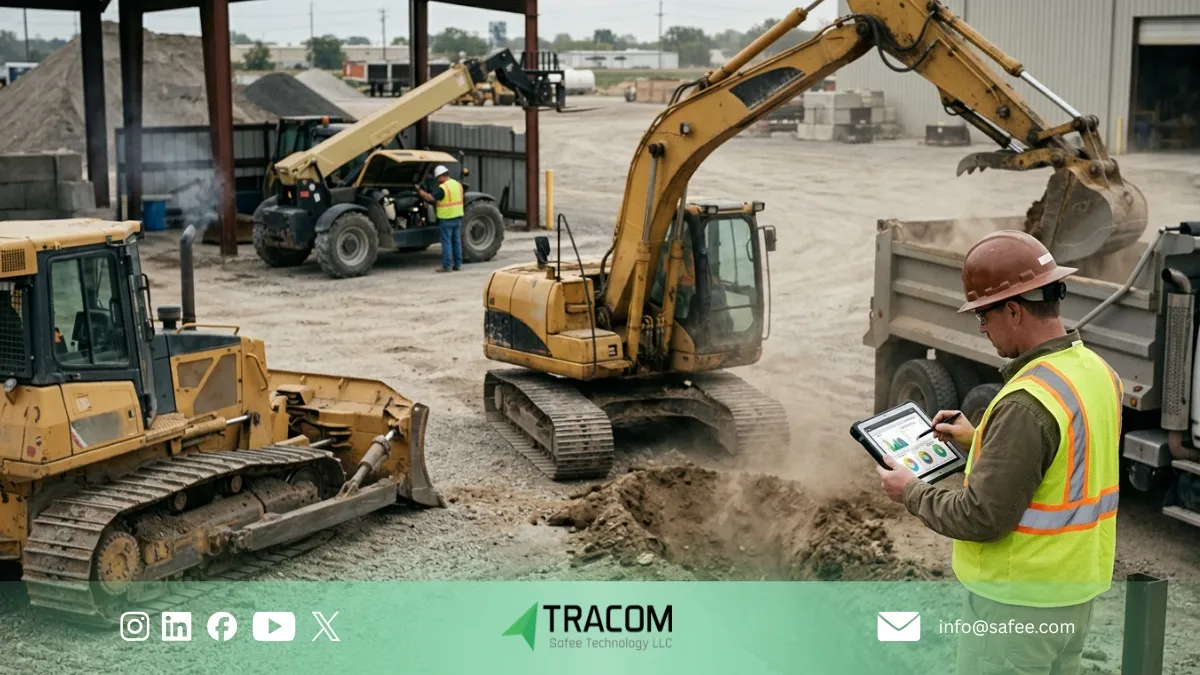
Equipment GPS tracker options by asset type
There is no single best device for every asset. The right equipment GPS tracker depends on power availability, concealment needs, movement pattern, reporting frequency, and how critical the asset is to the operation.
Hardwired equipment trackers
A hardwired tracker connects to the asset power source where installation is practical. This setup is often preferred for generators, forklifts, loaders, and selected heavy machines because it supports stable reporting and can reduce battery maintenance. When supported, it may also help capture ignition, run-time, or selected machine signals.
Best fit: assets with accessible power, high value, frequent use, or a need for consistent status reporting.
Battery or solar asset GPS tracker
A battery or solar asset gps tracker is useful when the asset has no reliable power source or when fast deployment matters. This is common for attachments, tanks, compressors, portable generators, temporary site assets, and rental equipment that moves between customers or job sites. For trailer-heavy operations, use a dedicated trailer tracking strategy because trailers have different power, yard visibility, dwell time, and cargo-security requirements.
Best fit: movable assets, non-powered equipment, attachments, temporary projects, and mixed fleets where wiring each unit is not realistic.
Offline-capable tracking for weak-coverage sites
When equipment works outside stable network coverage, the tracking strategy must protect the data trail. A suitable setup should support internal data storage, event history, and delayed synchronization so movement, geofence, run-time, and alert records can be reviewed when the device reconnects.
Best fit: mining support sites, oil and gas support operations, desert projects, remote infrastructure work, and high-value assets where event history and delayed synchronization matter.
Use this simplified table as a first filter before you speak with a tracking specialist.
Asset type | Recommended setup | Main value | Setup note |
Excavators / dozers | Hardwired or concealed battery | Location, geofence, movement alerts, engine hours where supported | Protect wiring and hide the unit |
Generators | Hardwired where possible | Run time, off-hours movement, site presence | Install inside a protected enclosure |
Forklifts / loaders | Hardwired | Utilization, idle time, status, location | Mount away from impact zones |
Portable site assets / attachments | Compact battery or solar asset gps tracker | Movement alerts, site presence, recovery support | Use secure, tamper-aware placement |
Attachments | Compact battery tracker | Movement alerts and asset recovery | Use tamper-aware placement |
Remote site equipment | Offline-capable tracking setup | Event history, movement records, delayed synchronization | Validate coverage, reporting interval, and installation position |
Construction equipment GPS for anti-theft control
Theft protection is one of the clearest reasons to deploy an equipment GPS tracker, especially when machinery is parked overnight, stored near open perimeters, or moved between sites by subcontractors and transport partners.
The goal is not to discover the problem days later. The goal is to detect unusual movement early enough to respond. A practical construction equipment gps setup combines location, geofencing, time rules, movement alerts, and escalation contacts.
Alerts that reduce noise
- Movement outside approved working hours
- Exit from a job-site or storage-yard geofence
- Device tampering or suspicious disconnection where supported
- Unexpected movement from a staging area, yard, or rental return zone
Tracom supports equipment-heavy teams with the most important fleet tracking features, including real-time insights, geofencing, tamper-aware alerts, remote monitoring, and stored event data for continuity. For heavy assets, these controls help managers act by exception instead of manually watching every machine or waiting for a phone call from the site.
Geofencing across GCC and global job sites
Geofencing is especially useful for GCC contractors, industrial operators, rental fleets, and global multi-site businesses because assets often move between projects, storage yards, ports, workshops, and customer locations. A geofence gives your team a clear rule: this asset should be here, during these hours, for this job.
When a machine leaves the approved zone, the alert can go to operations, security, the project manager, or the rental control team. That turns heavy equipment GPS tracking into a working control system rather than a passive map view.
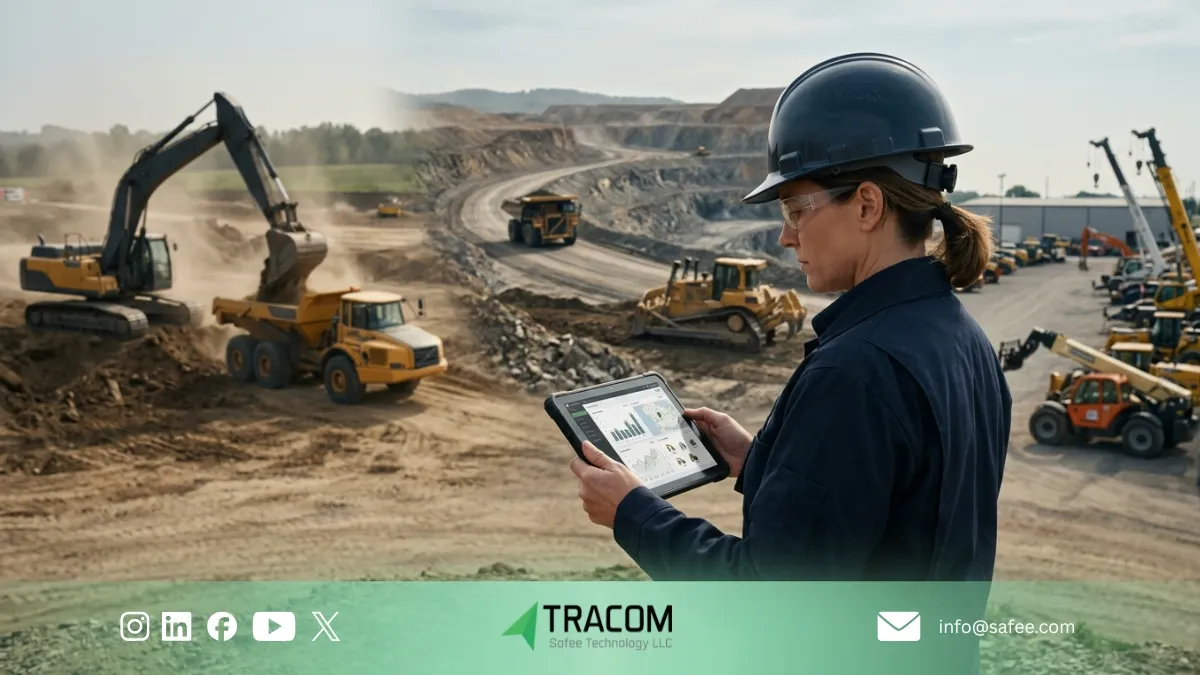
Stop guessing which equipment is really working
For many equipment teams, the hidden cost is not only theft. It is underused assets, idle machines, poor allocation, and rental decisions made without reliable data.
The good equipment GPS tracker helps answer the questions managers ask every week:
- Which machines are active and which are parked too long?
- Which site has more equipment than it needs?
- Which asset is being overused and may need earlier service?
- Which rented unit is costing money without enough productive hours?
This is where engine-hour tracking, run-time reporting, idle time, and site presence become more useful than mileage. For rental companies, verified utilization can also support billing, customer discussions, and return inspections. For contractors and industrial operators, it supports better purchase, rental, transfer, and retirement decisions.
Want to identify underused machines, idle assets, and equipment sitting too long at the wrong site? Tracom can help you configure utilization views, geofences, and exception reports around the way your operation actually runs.
If your tracking project also includes vehicles, drivers, dispatch, and reporting workflows, Our fleet management device system guide explains how hardware, platform software, alerts, and reporting work together as one operating layer.
Maintenance and downtime control with heavy equipment GPS tracking
Unplanned downtime hurts twice. The machine stops, and the project team around it loses time. Heavy equipment gps tracking helps maintenance teams move away from calendar-only service planning and toward service schedules based on real usage.
Use engine hours instead of assumptions
A machine that runs ten hours a day needs a different maintenance plan than a machine that runs once a week. Engine-hour reminders help teams schedule oil changes, inspections, and service intervals around actual operating load.
Use alerts to catch problems earlier
Where supported by the asset and installation type, selected signals such as ignition status, voltage behavior, temperature-related data, or diagnostic inputs can support earlier review. Even when full diagnostics are not available, consistent run-time and idle data can improve maintenance planning.
Use digital records to reduce disputes
Rental handovers, site transfers, and pre-shift checks become easier when the system keeps time-stamped records. This gives operations, maintenance, and finance teams a cleaner history when they need to review damage, usage, or responsibility.
One dashboard for equipment across sites
A multi-site equipment fleet cannot be managed through phone calls, spreadsheets, and WhatsApp updates forever. As the number of assets grows, the business needs a single operational view that shows what is active, where each asset is, which alerts are open, and which site needs action.
A useful dashboard for equipment should make it easy to filter by asset type, site, status, alert, utilization level, and ownership. This matters for construction firms with several active projects, mining operators with remote assets, rental companies with many customer locations, and industrial businesses that move equipment between yards and facilities.
Tracom helps B2B teams connect equipment, vehicles, and high-value assets into one visibility layer, with alerts, geofences, remote monitoring, and reporting views configured around real operating roles such as operations, maintenance, security, finance, and project management. Check our services.
How does Tracom help equipment-heavy B2B teams?
At Tracom, we do not treat equipment tracking as a plug-and-forget device purchase. We start with the operating model: which assets matter most, where they work, how often they move, who responds to alerts, and which reports the business actually uses.
For equipment-heavy B2B teams, Tracom helps structure the rollout around practical control points:
- Define priority assets such as excavators, loaders, forklifts, generators, compressors, attachments, and remote site equipment.
- Match each asset group with the right installation method, power strategy, reporting interval, and mounting approach.
- Configure geofences around job sites, yards, depots, workshops, ports, customer locations, and restricted zones.
- Set alert rules for off-hours movement, geofence exits, tamper attempts, unexpected relocation, and weak-coverage review.
- Build dashboard and reporting views for utilization, idle time, site presence, maintenance planning, and exception follow-up.
This matters across GCC and global operations because every environment is different. A contractor in Dubai may care most about job-site geofencing and off-hours movement. A rental company in Saudi Arabia may care more about utilization, return control, and billing confidence. A mining or industrial team may need stronger event history in weak-coverage areas. A global operator may need consistent reporting across countries and asset categories.
You can explore our GPS tracking device product, review our use cases, and contact us to build the setup around your real assets.
Planning an equipment GPS tracker rollout for construction, rental, mining, or industrial assets? Request a Tracom demo and we will help you define devices, zones, alerts, and reports before deployment.
Equipment GPS tracker buying checklist
Before you compare prices, answer these questions. They will help you avoid weak deployments and poor data quality.
- Which assets need tracking first: excavators, loaders, forklifts, generators, compressors, attachments, portable site assets, or all of them?
- Does each asset have reliable power access, or do you need a battery or solar asset gps tracker?
- Do you need engine hours, ignition status, run time, idle time, or only location and movement?
- Which sites need geofences: job sites, yards, ports, depots, workshops, customer locations, or restricted zones?
- Who receives alerts, and what is the escalation process after working hours?
- Does the asset operate in weak cellular coverage, and do you need internal storage, delayed synchronization, or adjusted reporting intervals?
- How will installation protect the device from weather, impact, tampering, and easy removal?
- Which reports will management actually use: utilization, idle time, transfers, site presence, maintenance, or exceptions?
- Do you need role-based access for operations, maintenance, finance, security, and project teams?
- Will the system scale across GCC sites and global locations as your operation grows?
If you are comparing tracking setups for vehicles and equipment together, our GCC GPS fleet tracking devices guide and telematics guide for B2B teams can help your procurement team define the right level of hardware, connectivity, alerting, and platform control.
FAQ about equipment GPS trackers
What Is the Best Equipment GPS Tracker for Heavy Equipment?
The best equipment gps tracker is the one that matches the asset, power source, environment, coverage conditions, and reporting goal. A hardwired device may be better for powered machines and generators, while a solar or battery asset gps tracker may be better for trailers, containers, and attachments.
Can an asset GPS tracker be used for attachments and portable site assets?
Yes, as long as the device is selected for the asset type. Attachments, tanks, compressors, portable generators, and temporary site assets usually need compact battery-powered or solar-supported devices with secure mounting and movement alerts rather than full vehicle-style installation.
Does Construction Equipment GPS Work in Remote Sites?
It can, but the setup must account for coverage realities. Some operations can use internal storage and delayed synchronization so event history remains available when connectivity returns. The right decision depends on site conditions, reporting needs, asset value, and how quickly your team must respond to exceptions.
How Does Heavy Equipment GPS Tracking Help Rental Companies?
It helps rental companies confirm where assets are, monitor movement, reduce unauthorized use, verify run time where supported, improve return control, and reduce disputes around usage, billing, and responsibility.
Is an Equipment GPS Tracker Enough to Stop Theft?
No tracker can guarantee theft prevention. The value comes from faster detection, better response, historical playback, geofence alerts, tamper awareness, and stronger asset control. Physical security and operational procedures should still be used with tracking.
What Data Should I Track Besides Location?
For equipment, the most useful data often includes geofence status, movement events, engine hours, run time, idle time, site presence, asset transfers, alert history, and maintenance reminders. The exact data depends on the asset and installation type.