
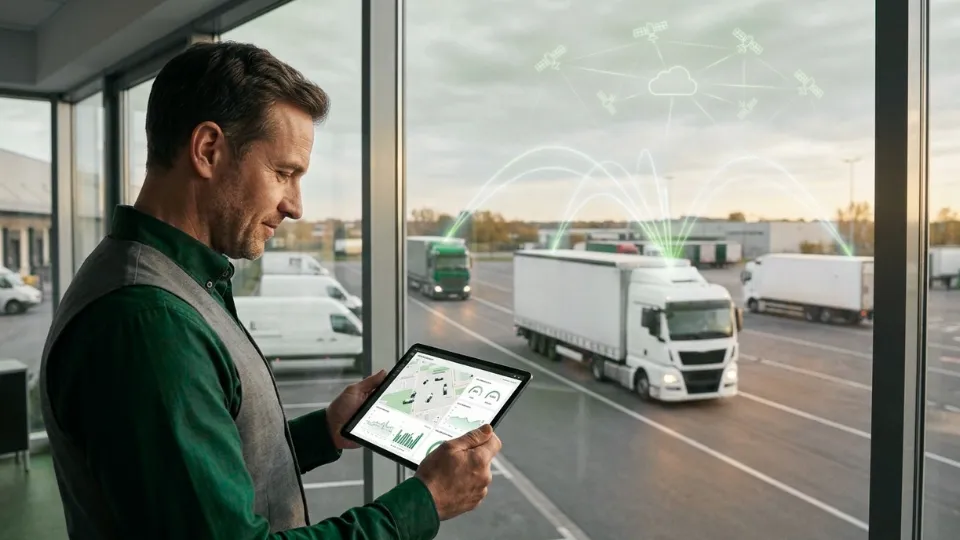
What Data does a telematics module collect?
A telematics module is not only a location device. In a commercial setup, it may collect several data layers that support fleet tracking technology and daily management.
Data type | Examples | Business use |
Location and movement | Live location, speed, heading, stops, route history, trip start/end time | Dispatch visibility, ETA review, route discipline, proof of visit |
Driver behavior | Speeding, harsh braking, harsh acceleration, idling, seat belt or event inputs where supported | Coaching, safety monitoring, policy enforcement |
Vehicle and engine signals | Ignition, odometer, RPM, selected fault or diagnostic signals where supported by CAN/OBD | Maintenance planning, fault review, utilization analysis |
Security and exceptions | Tamper attempts, unauthorized movement, panic events, geofence violations | Theft deterrence, asset protection, faster response |
Reports and history | Trip logs, event summaries, driver scorecards, vehicle reports | Audit support, management review, cost and safety analysis |
At Tracom, our features highlight capabilities such as second-by-second data reporting, driver monitoring with voice alerts, tamper alerts, panic alerts, geofencing, access keys, and internal storage for uninterrupted tracking.
Telematics vs GPS tracking
Many fleet managers use GPS tracking and telematics as if they mean the same thing. They overlap, but they are not identical.
GPS tracking is one part of telematics. A full fleet telematics solution adds vehicle data, event logic, alerts, reports, and workflows that help teams make decisions.
Capability | GPS-only tracking | Fleet telematics solution |
Real-time location | Yes | Yes |
Route history | Basic | Detailed with events and context |
Driver behavior events | Limited or unavailable | Speeding, harsh events, idling, policy exceptions |
Vehicle diagnostics | Usually no | Possible through CAN/OBD where supported |
Alerts and geofencing | Basic alerts | Configurable alerts, zones, escalation workflows |
Fleet reports | Basic map history | Operational, safety, utilization, and management reports |
Business value | Find the vehicle | Control cost, safety, utilization, security, and accountability |
This distinction matters when your fleet is scaling. A small team may start by asking for location. A growing operation soon needs exception alerts, driver scoring, unauthorized-use control, geofences, tamper awareness, reporting, and integration readiness. That is where gps fleet tracking technology becomes a business control layer, not only a map.
Importance of telematics for fleet management in the GCC
Telematics for fleet management is most valuable when it solves real operating pain. In the Gulf, fleet teams often manage long routes, high vehicle utilization, heat, driver accountability challenges, customer expectations, and assets moving across cities, emirates, or countries. A weak tracking setup creates delays, arguments, fuel waste, and poor management visibility.
A stronger fleet tracking technology setup helps teams control daily operations by giving them live visibility, reliable event history, and structured reporting. The value is not in collecting more data; it is in collecting the right data and turning it into action.
All our services are designed to support remote configuration and SMS-based management options, which can help teams manage distributed vehicles without unnecessary site visits.
GPS fleet tracking benefits after telematics
The strongest gps fleet tracking benefits appear when telematics is connected to business workflows, not left as a passive dashboard. Below are the outcomes fleet leaders usually care about first.
- Live visibility: Dispatchers know where vehicles are, what they are doing, and which exceptions need attention.
- Better driver accountability: Speeding, harsh driving, idling, and route violations become measurable events rather than opinions.
- Lower fuel waste: Managers can review idling, route drift, unauthorized trips, and driving patterns that increase consumption.
- Faster incident response: Panic alerts, tamper alerts, unauthorized movement, and geofence breaches help teams react earlier.
- Smarter maintenance planning: Selected vehicle signals, engine hours, odometer data, and fault indicators can support preventive decisions where vehicle interfaces allow.
- Stronger reporting: Trip history, event summaries, driver performance, and vehicle utilization can support management reviews and accountability.
These are also the practical gps fleet tracking systems benefits that matter to executives: fewer blind spots, cleaner evidence, better utilization, stronger safety culture, and more control over operating costs.
Problems solved with GPS fleet tracking and telematics
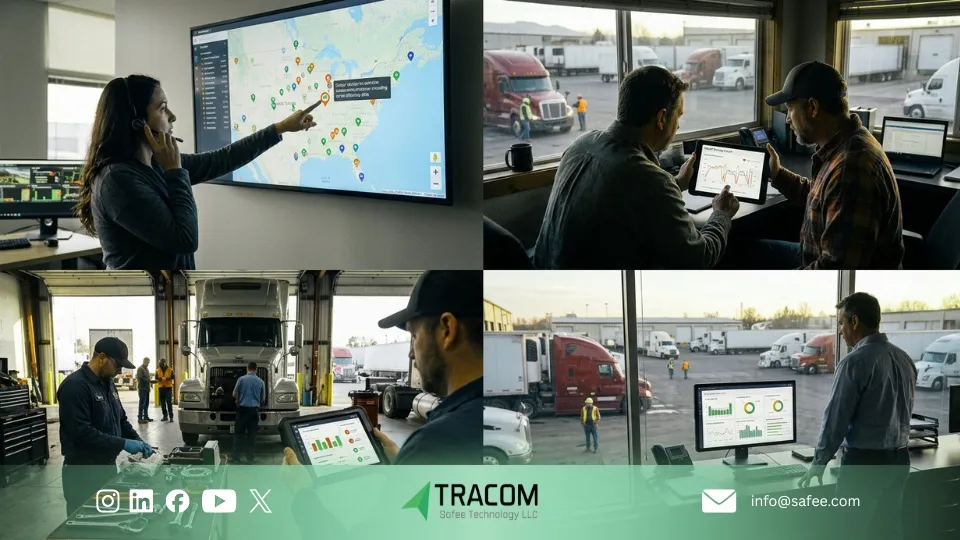
The phrase problems solved with gps fleet tracking should be understood in business terms. The technology is useful because it removes operational uncertainty.
Problem | What telematics changes |
Too many status calls | Live fleet visibility reduces manual follow-up and gives dispatch a real-time operating view. |
Driver disputes | Time-stamped events and trip history create a shared record for coaching and review. |
Fuel waste | Idle time, route behavior, unauthorized use, and harsh driving become visible patterns. |
Poor route discipline | Geofences, trip playback, and exception alerts help teams manage by policy. |
Maintenance surprises | Vehicle usage and selected diagnostic signals help identify issues earlier where supported. |
Security risk | Tamper, movement, panic, and access-related alerts improve response to misuse or theft risk. |
For related operational examples, explore our use cases across logistics, transportation, and oil-and-gas environments.
Fleet tracking technology use cases across GCC and global fleets
Different industries use the same telematics data in different ways. A fleet telematics solution should therefore be configured around the operation, not sold as a generic package.
- Logistics and delivery fleets: Use live location, ETAs, stop history, and geofences to reduce missed deliveries and customer-service calls. For related hardware selection, review our GPS fleet tracking devices guide.
- Construction and project fleets: Use geofences, utilization reports, and unauthorized-use alerts to protect equipment and manage site movement.
- Field service fleets: Use proximity, availability, trip records, and route history to assign jobs and verify visits.
- Truck and heavy-vehicle fleets: Use durable devices, driver behavior events, diagnostics where supported, and trip reports to improve long-route control. See our GPS tracking devices for trucks guide.
- Government and regulated operations: Use role-based reports, geofence history, alerts, and audit trails to improve accountability across departments or regions.
How to choose a fleet telematics solution for GCC operations?
Choose a fleet telematics solution by starting with the operating problems you need to control, not only the device price. For GCC fleets, procurement, IT, and operations teams should first define whether the system must improve location visibility, driver behavior monitoring, fuel control, maintenance planning, unauthorized-use detection, customer proof, safety compliance, or reporting.
Follow these steps before shortlisting a provider:
- Map your fleet types: Identify whether you operate light vehicles, trucks, buses, trailers, equipment, or mixed fleets. Each category may need different devices, installation methods, and data requirements.
- Check your connectivity conditions: Review where your vehicles actually operate: city routes, remote roads, underground parking, ports, industrial zones, construction sites, or cross-border routes. These conditions affect buffering, SIM options, and update frequency.
- Define the data you need: Decide whether you need basic location tracking, driver events, CAN/OBD data, fuel-related signals, maintenance alerts, or advanced integrations with other business systems.
- Set alert ownership rules: Clarify who receives each alert, how urgent it is, when it should escalate, and how the team will review it. Alerts without ownership become noise.
- Evaluate platform usability: Make sure managers can work with clear dashboards, reports, filters, trip history, and exceptions instead of raw device data that requires manual interpretation.
- Plan rollout and support: Confirm how installation, configuration, user training, reporting cadence, and post-launch support will be handled. In telematics, poor setup can reduce the value of even strong hardware.
Before choosing hardware, review our product, features, and services by visiting our website to see how the device layer, platform capabilities, and deployment support work together for GCC fleet operations.
Why choose Tracom for telematics in the GCC and worldwide?
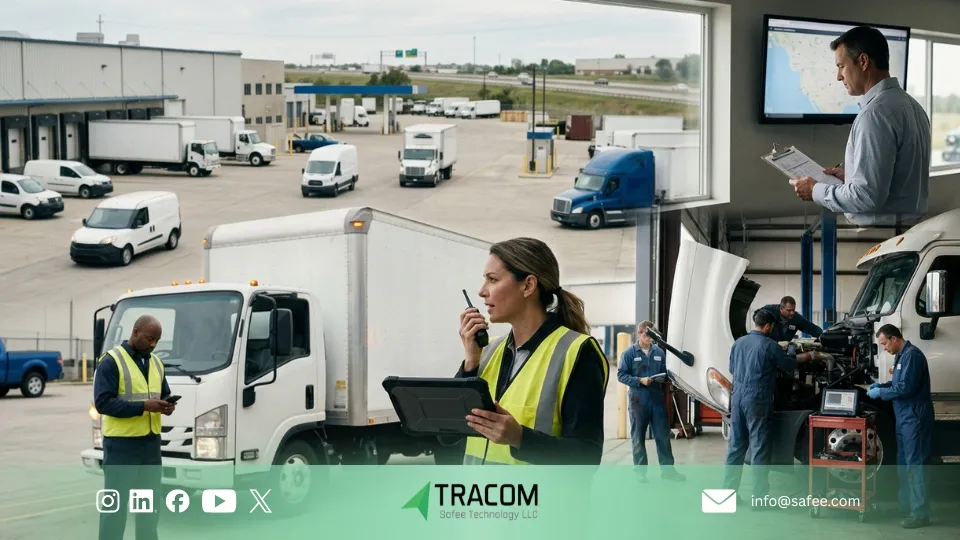
At Tracom, we help B2B fleets move from basic vehicle tracking to practical operational control. Our approach is consultative: we look at your fleet size, vehicle types, route conditions, reporting goals, and risk profile before recommending the device setup and platform workflow.
Tracom is designed for businesses that need more than a location dot. Our solution supports fleet visibility, intelligent alerts, driver monitoring, geofencing, tamper awareness, storage continuity, and reporting workflows that help teams make decisions faster. For GCC fleets, this is especially useful when vehicles move across dense cities, highways, industrial zones, and remote operating areas.
Request a Tracom demo to see how telematics data, alerts, reports, and device options can fit your GCC or global fleet operation.
FAQs about what is telematics
What is a telematics module?
A telematics module is the in-vehicle hardware unit that captures GPS/GNSS location, selected vehicle signals, driver events, ignition, movement, and other data, then sends it to the fleet platform.
How does telematics work in a fleet?
How telematics works can be explained in five steps: a telematics module captures vehicle and location data, stores it during coverage gaps, transmits it to the cloud, presents it in dashboards and reports, and helps managers act through dispatch, coaching, maintenance, or security workflows.
What is the difference between GPS tracking and telematics?
GPS tracking mainly focuses on location and movement. Telematics includes GPS tracking but adds driver behavior events, vehicle diagnostics where supported, alerts, reporting, geofencing, and management workflows.
What are the main gps fleet tracking benefits?
The main gps fleet tracking benefits include live visibility, fewer status calls, better driver accountability, reduced idle time, stronger route discipline, faster alert response, improved asset security, and clearer reports.
Is telematics suitable for small and medium fleets in the GCC?
Yes. Even smaller fleets can benefit from visibility, alerts, trip history, and basic reports. Larger fleets usually add deeper driver behavior monitoring, integrations, role-based controls, and advanced reporting.
How do I choose the right fleet telematics solution?
Start with your operating problems: visibility, fuel, safety, maintenance, unauthorized use, or reporting. Then match the device, platform, alerts, and reporting setup to your vehicle types, routes, coverage realities, and management responsibilities.