

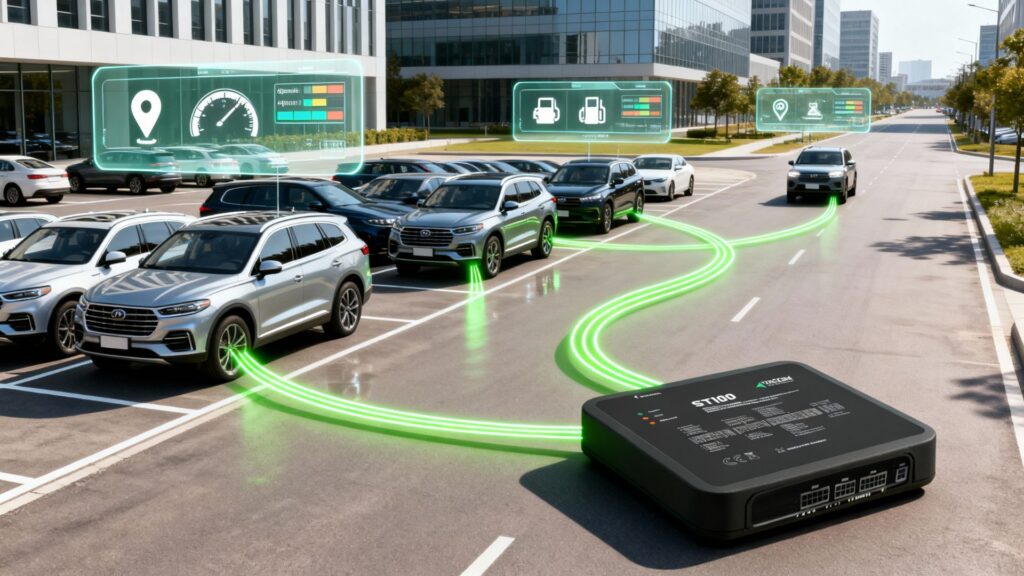
Selecting the best GPS vehicle tracking device is essential for any company that needs clearer visibility, lower fuel costs, and full control over driver behaviour.
With rising operational pressures, businesses now depend on the best GPS car tracking device to track routes with continuous tracking, prevent misuse, and improve daily decision-making.
In this guide, you’ll learn how to evaluate a GPS tracking device for fleet vehicles, compare the best fleet tracking device options, and understand what truly separates the best GPS trackers for fleets from basic consumer tools—plus why many organizations choose Tracom for reliable, commercial-grade telematics.
What Defines the Best GPS Car Tracking Device?
Choosing the best GPS vehicle tracking device means selecting hardware that delivers accurate data, consistent performance, and long-term reliability—especially in commercial environments where vehicles operate for long hours and under harsh conditions.
A true fleet-grade solution must go beyond basic location tracking and provide the intelligence needed to control costs, improve safety, and manage daily operations at scale.
The best GPS car tracking device typically includes:
- High-Precision Multi-Constellation GNSS: Support for GPS, GLONASS, Galileo, QZSS, and BDS ensures accurate positioning across cities, highways, and remote areas.
- Stable LTE/GSM Connectivity: Real-time communication is essential for any GPS tracking device for fleet vehicles, ensuring uninterrupted visibility.
- Advanced Internal Antennas: Internal GNSS and LTE antennas provide stronger signal stability and reduce external interference.
- Second-by-Second Reporting: Enables precise safety monitoring, route analysis, and incident reconstruction.
- Smart Driving Behavior Analytics: Reports on speeding, harsh braking, rapid acceleration, and idling—key factors that affect fuel cost and fleet risk.
- Tampering & Jamming Detection: Protects your vehicles against unauthorized access or attempts to disable the tracker.
- Full Platform Integration: The best fleet tracking device must connect seamlessly with your existing fleet management platform for unified operations.
These features are what separate professional-grade fleet solutions from outdated, consumer-level GPS devices that can’t handle commercial demands.
If your goal is operational accuracy, high visibility, and dependable performance, choosing the best GPS trackers for fleets becomes a strategic investment—not just a purchase.
Want to see how Tracom’s devices outperform standard trackers? Request a live demo today.
Types of GPS Tracking Devices for Fleet Vehicles
When evaluating the best GPS vehicle tracking device, companies encounter several device categories—each designed for specific operational demands.
Understanding these types makes it easier to select a system that matches your fleet size, vehicle type, and reporting requirements.
- Hardwired GPS Trackers
Built for heavy-duty commercial use, these trackers offer permanent installation, continuous power, and long-term durability—ideal for fleets that operate trucks, vans, and high-mileage vehicles. - OBD-II Plug-and-Play Trackers
A quick-install option suited for leasing fleets or mixed vehicle groups that need basic diagnostics and rapid deployment without downtime. - Advanced Telematics Units
Professional solutions such as the Tracom ST100 combine GNSS accuracy, LTE/GSM communication, OBD-II CAN-bus diagnostics, RS232 integration, tampering and jamming alerts, and robust analytics. These devices provide deeper visibility than standard plug-in GPS systems.
For companies seeking reliability and scalability, equipping vehicles with GPS tracking devices for fleet vehicles designed for harsh conditions and long operating hours is essential. This is why many businesses adopt the best fleet tracking device engineered with rugged commercial hardware rather than consumer-level models.
Read also: Best practices for GPS tracker placement in fleet vehicles
Key Features to Look for in the Best GPS Trackers for Fleets
When choosing the best GPS vehicle tracking device, fleet operators should focus on features that guarantee accuracy, reliability, and real-time data visibility.
The best GPS car tracking device is the one that supports daily decision-making—not just basic location reporting.
A high-performance system should provide:
- Multi-constellation GNSS (GPS/GLONASS/Galileo/QZSS/BDS): Ensures precise tracking across all regions and driving environments.
- LTE/GSM connectivity: Keeps real-time data flowing without delays.
- Internal GNSS & LTE antennas: Improve signal stability inside commercial vehicles.
- IP56-rated durability: Protects the device from heat, dust, moisture, and vibration.
- OBD-II CAN-bus & RS232 integration: Enables engine diagnostics and advanced telematics insight.
- Tampering & unplug alerts: Prevent unauthorized interference or tracker removal.
- Jamming detection: Identifies attempts to block GPS signals.
- Acceleration & harsh driving detection: Helps improve safety and reduce fuel waste.
- Second-by-second tracking: Provides unmatched accuracy for incident analysis and compliance.
- OTA configuration & firmware updates: Simplifies remote fleet management and reduces downtime.
For medium and large operations, a GPS tracking device for fleet vehicles must deliver uninterrupted data and predictive insight—qualities that position the Tracom ST100 among the best fleet tracking device options available today.
Read also: A complete guide to choosing the best GPS car tracking device in the UAE
How to Compare the Best Fleet Tracking Devices
To compare the best GPS vehicle tracking device, focus on how each system performs in real operational environments—not just on-paper specifications.
Start by evaluating data accuracy and signal stability, ensuring the device maintains continuous satellite lock and reliable reporting. Then check whether the tracker provides real-time analytics, preferably second-by-second updates that give you precise visibility across your routes.
Next, inspect the hardware strength to confirm it can withstand heat, vibration, dust, and long engine cycles typical of commercial fleets. You should also review the depth of features—the best fleet tracking device will offer diagnostics, tampering alerts, driving-behavior analysis, and advanced security protections.
Finally, verify platform compatibility so that the GPS tracking device for fleet vehicles integrates smoothly into your existing fleet management system without workflow disruptions.
By following these steps, you’ll identify the best GPS trackers for fleets that genuinely support your operational goals and long-term growth. For help comparing options, Tracom’s specialists can guide you toward the ideal solution.
Read also: The most effective tracking devices for trucks and heavy vehicles
How to Choose the Best GPS Tracking Device for Fleet Vehicles
Choosing the best GPS vehicle tracking device starts with identifying the real operational challenges your fleet faces—rising fuel costs, inconsistent driver behaviour, limited route visibility, and unauthorized after-hours usage. The right solution should eliminate these issues through accurate, real-time telematics.
When comparing options, assess whether the device supports your installation needs (hardwired or OBD-II), delivers the data frequency your operations require, and offers strong LTE/GNSS performance for uninterrupted tracking.
You should also ensure compatibility with RS232 and OBD-II CAN-bus for diagnostics, verify the presence of an internal backup battery, and confirm support for OTA updates, tampering alerts, and jamming protection.
A high-quality GPS tracking device for fleet vehicles provides scalable, long-term control over your fleet and directly contributes to cost reduction and safety improvements.
If you want confidence in your selection, Tracom’s specialists can help you identify the best GPS car tracking device for your operational goals. Eplore Tracom in detailes
Read also: How to choose the best fleet telematics device
Why Choose Tracom for Your Fleet GPS Tracking Needs
Tracom delivers enterprise-grade telematics engineered specifically for fleets that cannot afford downtime or inaccurate data.
Our flagship ST100 is considered one of the best GPS vehicle tracking device options in the market because it combines advanced positioning technology with rugged commercial durability.
The device features multi-constellation GNSS for maximum accuracy, LTE/GSM communication for uninterrupted visibility, internal antennas for stable performance, and full integration through RS232 and OBD-II CAN-bus.
Additional protections—including tampering, unplug, and jamming detection—ensure data reliability in high-risk operating environments, while its 2600 mAh internal battery, IP56 housing, second-by-second tracking, and OTA firmware updates support long-term operational continuity.
For fleets searching for the best GPS car tracking device that delivers accuracy, resilience, and real-time intelligence, the ST100 stands out as a proven choice used across logistics, service, construction, and corporate sectors.
Tracom provides both the hardware and specialist support needed to deploy the best fleet tracking device for scalable, future-ready fleet management.
Strengthen your fleet operations with Tracom ST100—contact us today for a tailored proposal.
FAQs about the Best GPS Tracking Device:
1. What is the best GPS tracking device for vehicles?
The best GPS vehicle tracking device is the one that offers high GNSS accuracy, real-time telematics data, strong LTE/GSM connectivity, and reliable performance in commercial environments. Devices like Tracom ST100 deliver all these capabilities for full fleet visibility.
2. How do I choose a GPS tracker for my fleet?
Choose a GPS tracking device for fleet vehicles based on second-by-second reporting, durability (IP-rated hardware), installation type (hardwired or OBD-II), and security features such as tampering and jamming detection. These factors ensure long-term stability and operational control.
3. Are GPS car tracking devices accurate?
Yes—modern devices deliver high precision. The best GPS car tracking device uses multi-constellation GNSS (GPS, GLONASS, Galileo, QZSS, BDS), ensuring accurate and stable tracking even in dense cities, tunnels, or remote routes.
4. What is the difference between basic GPS devices and fleet GPS devices?
Basic GPS units only provide location. The best fleet tracking device, however, delivers advanced telematics—driver behavior analytics, engine diagnostics, route insights, and real-time alerts—giving fleet operators a full operational picture, not just a map point.