

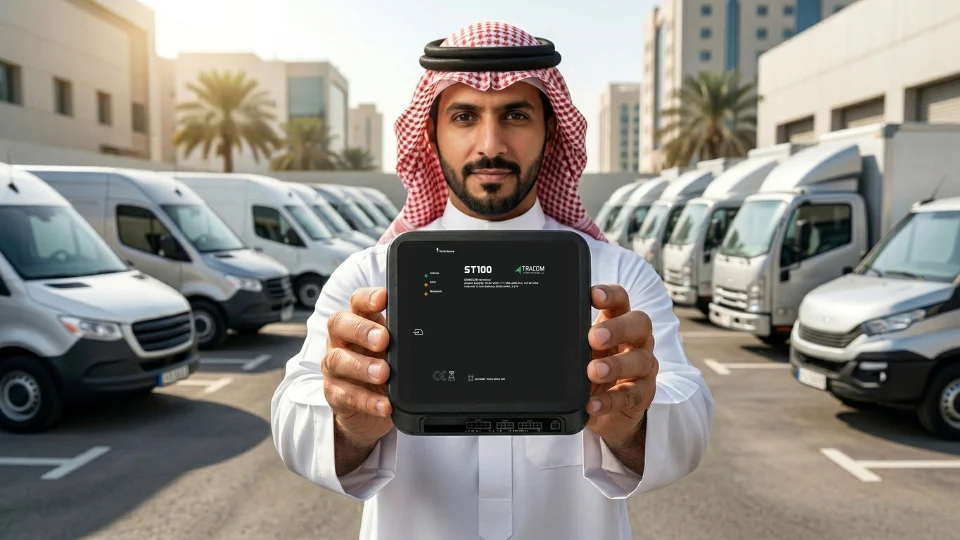
If you manage a fleet, the real challenge is not finding the lowest-priced tracker. It is choosing GPS tracking devices that stay reliable in daily operations. A cheap vehicle tracking device may look like a saving at first, but it can quickly create downtime, weak reporting, and costly blind spots.
That is why many businesses choose fleet GPS devices built for stronger control, continuity, and long-term value, such as the Safee Tracom ST100.
In this article, you will learn what makes fleet GPS tracking devices truly cost-effective, how they work, where they create the most value, and how to choose the right setup for your fleet in 2026.
What are fleet GPS Tracking devices?
Fleet GPS devices—often searched for as GPS car tracking devices—are hardware units installed in vehicles to capture location data through satellite positioning and send it to a software platform over cellular networks. In fleet operations, this hardware may also be described as a GPS tracker, GPS tracking unit, or AVL unit, depending on the technical context. These devices do more than show where a vehicle is. They help managers verify routes, review stop history, measure utilization, monitor safety events, and enforce operating policies across the fleet.
For commercial use, performance matters more than basic tracking alone. The most effective fleet GPS devices deliver accurate positioning, real-time updates, stable connectivity, and dependable event reporting. They should also support vehicle data, external sensors, and other inputs that help fleets manage operations with greater control.
This is why you should not judge a solution only by whether it looks like a cheap vehicle tracking device. In B2B fleet management, real value comes from reliability, visibility, and consistent day-to-day performance. If your goal is dependable tracking under operational pressure, fleet-grade GPS trackers and tracking units are the better choice.
If you need tracking you can trust under daily fleet pressure, start with fleet-grade GPS trackers and AVL-ready tracking units, not consumer gadgets.

How does a GPS tracking device for fleet vehicles work?
GPS tracking devices for fleet vehicles work through three core layers: positioning, connectivity, and onboard processing. In practice, the same hardware may also be described as a GPS tracking unit or AVL unit in more technical fleet discussions.
When these layers perform well together, the device delivers reliable fleet data and stronger long-term value. When one of them is weak, the result is often delayed updates, incomplete visibility, or unnecessary operational cost.
1) Positioning
The AVL unit calculates vehicle location, speed, and movement through GNSS. In fleet operations, stable positioning is essential for route visibility, stop verification, and day-to-day control. Devices that support multiple satellite constellations can provide more consistent performance across different operating environments.
2) Connectivity
After location and event data are captured, the GPS tracking unit sends that information to the platform through cellular networks. For operations that move beyond normal cellular coverage, the deployment architecture may also include satellite backup connectivity, such as ORBCOMM or Iridium, where operational continuity requires it.
This enables live tracking, faster response, and better operational oversight. In practice, strong connectivity matters because inconsistent transmission reduces the value of the data your fleet depends on.
3) Onboard processing and interfaces
A fleet GPS tracking unit also needs enough onboard capability to handle events reliably and support wider operational needs. They should include the right interfaces for vehicle data, external sensors, and future workflow expansion. For example, solutions such as the ST100 are designed to support fleet and asset management requirements with connectivity and integration options that fit real business operations.
For fleet managers, the key point is simple: a GPS tracker or AVL unit is effective only when positioning, connectivity, and integration work together. The best-value solution is not just a tracker that reports location, but a device that supports reliable control across daily fleet operations.
Want tracking that stays reliable even when fleets scale? Choose GPS trackers and tracking units with strong positioning, connectivity, and integration—not one-dimensional trackers.
Read also: where exactly you should place Tracom
Why are high-value fleet GPS devices essential for fleets?
If you manage a fleet, the real challenge is not finding the lowest-priced tracker. It is choosing GPS trackers and tracking units that stay reliable in daily operations. Some buyers begin by comparing options to a cheap vehicle tracking device, but what fleets actually need is continuity, visibility, and dependable control.
When tracking hardware is unreliable, the cost shows up in missed trips, coverage gaps, weak reporting, avoidable downtime, and repeated maintenance. Over time, these issues create operational blind spots and reduce confidence in the data your team relies on. For fleet managers, this is where the difference between low-cost hardware and real business value becomes clear.
High-value fleet GPS devices are built for continuity, durability, and dependable performance in real operating conditions. For example, solutions such as the ST100 are designed to support fleet environments with stronger resilience and hardware features that reduce the risk of silent tracking failures. Power continuity is also part of long-term value. Devices such as the ST100 are built with power protection and backup support that help reduce downtime risk in real fleet conditions.
If your fleet has dealt with missing trips, offline devices, or inconsistent reporting, moving to high-value GPS tracking devices is often one of the most practical ways to improve visibility, reduce disruption, and strengthen long-term return on investment. Contact us today.
Key benefits of using cost-effective GPS tracking devices for fleet vehicles
When fleets invest in cost-effective GPS tracking devices for fleet vehicles, the benefit is not just lower upfront spend. The real value comes from stronger control, better reporting, and fewer operational losses over time.
That is what separates business-ready fleet GPS devices from hardware that looks affordable at first but creates avoidable cost later.
Reducing fuel waste through better fleet visibility
Fuel waste is harder to control when idling, route deviation, and unauthorized vehicle use are not clearly visible. Reliable tracking turns these issues into measurable data, helping fleet managers take action based on facts rather than assumptions.
Supporting safer driving through event-based monitoring
Modern fleet GPS devices should support safer driving, not just location tracking. Event-based monitoring helps teams identify risky driving behavior and apply policies more consistently across the fleet. Solutions such as the ST100 support this type of structured safety visibility in day-to-day operations.
Responding faster to operational exceptions
When data is real-time and consistent, dispatch teams can respond faster to route changes, delays, unauthorized movement, and other exceptions. This improves operational control and reduces the impact of disruptions on service delivery.

Supporting clearer accountability and incident review
Accurate tracking data makes incident reviews, trip validation, and performance checks more reliable. It gives fleet managers a stronger basis for investigating issues and reviewing vehicle activity with greater confidence. Solutions such as the ST100 also support broader operational visibility that helps strengthen day-to-day accountability.
Reducing support effort through remote device management
Remote configuration and firmware updates reduce the need for site visits and manual intervention. This helps fleets maintain consistency across devices while lowering maintenance effort over time. Solutions such as the ST100 are designed to support this kind of remote management in active fleet environments.
Many fleet owners begin by comparing options to a cheap vehicle tracking device, but for fleet operations, that is rarely the right benchmark on its own. The better decision is to choose cost-effective GPS tracking devices for fleet vehicles that protect uptime, improve reporting accuracy, and support reliable control at scale.
Read also: the main differences between GPS devices
Applications of budget-friendly fleet GPS devices
Budget-friendly fleet GPS devices deliver the strongest value when they are matched to the right operational use case. The goal is is to choose a solution that keeps costs under control without sacrificing uptime, visibility, or reporting reliability.
Last-mile delivery
For last-mile fleets, live location data, stop timing, and geofencing help dispatch teams make faster decisions and improve ETA accuracy. In this environment, fleet GPS devices create value by supporting tighter delivery control and better customer communication.
Field service fleets
For field service operations, tracking supports proof of visit, route efficiency, and response-time monitoring. This gives managers a clearer view of workload distribution and helps reduce wasted mileage across daily service routes.
Long-haul and intercity logistics
In long-distance operations, reliable connectivity and data continuity matter even more. Missed trips or delayed tracking on longer routes can create reporting gaps, weaker customer proof, and avoidable disputes.
In these environments, some fleets also evaluate satellite backup connectivity options—such as ORBCOMM or Iridium—to strengthen continuity when routes extend beyond dependable cellular coverage.
High-risk operations and asset protection
Some fleets operate in environments where tampering, signal interference, or deliberate device disruption are real risks. In these cases, fleet GPS devices need stronger protection features. For example, solutions such as the ST100 are designed to support fleet environments where device integrity and operational continuity matter more.
The right device depends on how your fleet operates, where your vehicles run, and what level of control your team needs each day. The best-value choice is a budget-friendly fleet GPS device that fits the use case while still delivering fleet-grade reliability.
How to choose the best affordable fleet GPS tracking device for your needs?
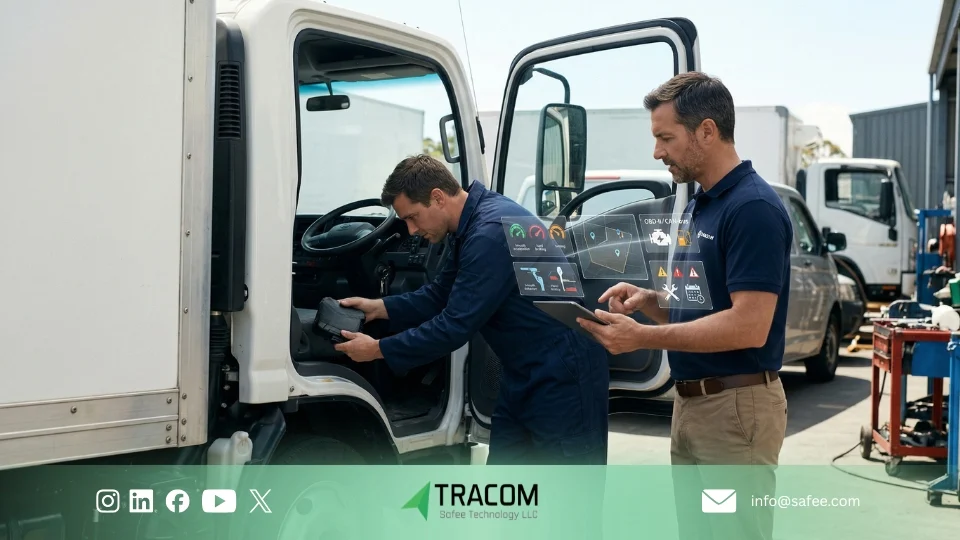
Choosing the best affordable fleet GPS tracking device is not about finding the lowest purchase price. It is about selecting a solution that gives your fleet reliable performance, better visibility, and lower total cost over time. Here are practical tips from Tracom experts:
- Prioritize LTE-based fleet devices designed for IoT use, with stable antennas and reliable network performance. Solutions such as the ST100 support LTE (Cat1) with GSM/GPRS capability as part of their connectivity design.
- Choose devices with strong power resilience to prevent silent downtime. Power issues often create tracking gaps that appear as normal “no signal,” even when the real problem is device interruption.
- Pick devices with interfaces that match your future needs if you want more than location tracking. Look for support that can accommodate vehicle data, sensor workflows, and broader fleet visibility over time.
- Look for ingress protection and operating temperature specs that fit real fleet conditions. Hardware that performs well in controlled settings may not deliver the same reliability in daily commercial use.
- Make sure you can manage devices remotely because if you cannot, your affordable plan quickly becomes expensive. Solutions such as the ST100 support remote device management through the SCMS portal, with OTA configuration and firmware updates that help fleets scale more efficiently.
Tracom’s high-value GPS fleet tracking solutions
Tracom’s high-value fleet tracking starts with one principle: reliability under real operating pressure. For commercial fleets, the goal is not just to see vehicle location, but to maintain accurate, continuous, and actionable data across daily operations.
The Safee Tracom ST100 is designed as a fleet-grade GPS tracking unit that supports fleet and asset management with the connectivity, interfaces, and hardware resilience required in real business environments. It combines GNSS and LTE/GSM connectivity, internal antennas, RS232 interfaces, integration-ready I/O support, and backup battery support in a configuration built for operational continuity.
This is where high-value fleet GPS devices create a clear advantage over an inexpensive vehicle tracking device that may look affordable at first but fall short in uptime, reporting consistency, or long-term support. In fleet operations, real value comes from dependable performance, fewer blind spots, and stronger confidence in the data used for daily decisions.
Beyond core tracking, the ST100 supports features that strengthen operational control, including second-by-second data gathering, G-sensor support, tampering and unplug detection, GPS and LTE signal jamming detection capability, and remote management through the SCMS portal, including OTA configuration and firmware updates. For urgent parameter changes when internet access is unavailable, SMS-based adjustments can also serve as a fallback.
That is what high value means in 2026: fewer service interruptions, fewer reporting gaps, stronger reporting confidence, and better fleet control over time. If you want to evaluate the right setup for your vehicles, routes, and operational priorities, contact us to recommend a configuration tailored to your fleet.
Read also: how tracking devices actually works?
Price of Tracom’s GPS tracking devices
Our pricing depends on how your fleet is configured, not on the device alone. In practice, fleets invest in a broader tracking setup that can include hardware, installation approach, connectivity, platform requirements, and the level of operational support needed across the fleet.
For that reason, the best way to evaluate the price of fleet GPS devices is through total cost of ownership, not purchase price alone. Key pricing factors typically include:
- The number and types of vehicles in the fleet
- The interfaces required, such as RS232, I/O, 1-Wire, or other vehicle-data integration needs
- The level of uptime protection needed, including power protection and backup support
- Whether the fleet requires remote configuration and firmware updates at scale
- Security needs such as tamper detection and jamming detection
Many buyers begin by comparing options to a cheap vehicle tracking device, but that comparison is often too narrow for fleet operations. A lower entry price may still lead to higher long-term cost if the solution creates downtime, weak reporting, added maintenance effort, or reduced control in daily operations.
If your goal is to stay cost-effective, compare outcomes as well as price: downtime avoided, fuel waste reduced, disputes minimized, and operational performance improved. To get a tailored quotation, share your vehicle count, routes, and required features with Tracom.