

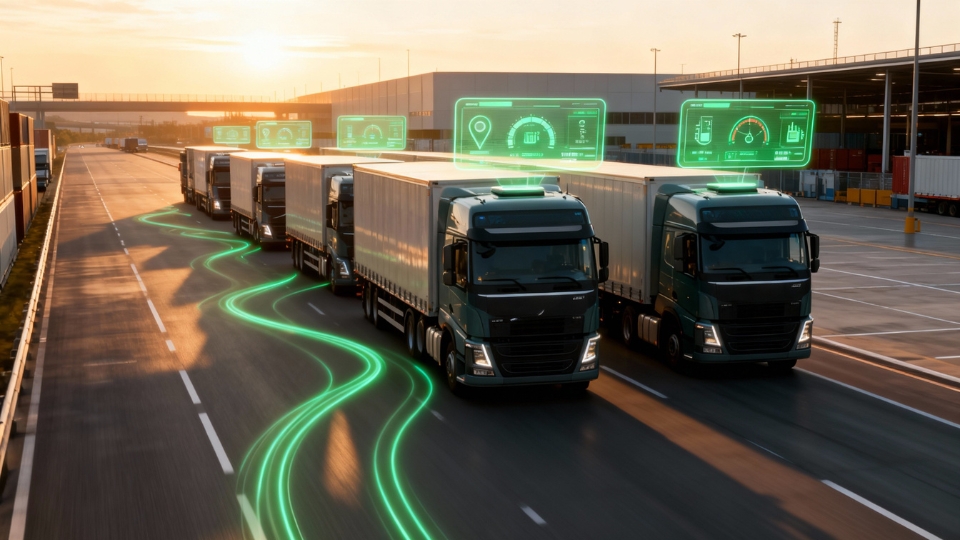
With rising fuel costs, tight delivery schedules, and increasing security risks, fleets today cannot afford blind spots. This is exactly why understanding why your operation needs a GPS tracking device for trucks is now essential not optional.
Modern tracking devices give you real-time visibility, optimized routing, and protection against unauthorized use, helping you cut operational waste and maintain safer, more compliant fleet operations.
Throughout this guide, you’ll learn how GPS tracking devices for commercial trucks work, what features matter, and why advanced solutions like the Tracom ST100 enable fleets to operate smarter, faster, and far more efficiently.
Boost your fleet’s visibility and performance—start your upgrade with Tracom today.
What Is a GPS Tracking Device for Trucks?
A GPS tracking device for trucks is a professional-grade telematics unit installed inside commercial vehicles to monitor movement, driving behaviour, engine performance, and overall operating conditions.
Unlike basic navigation tools, a tracking device for trucks combines multi-constellation GNSS signals with LTE/GSM communication to deliver real-time, high-accuracy location data and deep vehicle analytics.
Read also: A complete guide to choosing the best GPS car tracking device in the UAE
Modern GPS tracking devices for commercial trucks include advanced hardware such as:
- Multi-constellation GNSS (GPS, GLONASS, Galileo, QZSS, BDS)
- Internal GNSS and LTE antennas
- Built-in sensors for movement and event detection
- LTE/GSM communication modules
- RS232 interface
- OBD-II CAN-bus integration
- Internal data storage for offline reporting
- Weather-resistant, vibration-proof housings
These tracking devices on trucks provide far more than location: they support safety compliance, reduce operational waste, prevent unauthorized usage, and give fleet managers complete visibility across long-distance routes.
If you want to unlock the full advantages of modern truck telematics, speak with Tracom today.
How Tracking Devices for Trucks Work?
A modern GPS tracking device for trucks follows a streamlined, automated process to capture and transmit operational data in real time.
Here’s how the system functions inside a commercial fleet environment:
1. GNSS Signal Reception
The device receives satellite signals from multiple constellations—GPS, GLONASS, Galileo, QZSS, and BDS. This multi-constellation support enables high-precision positioning, even in dense cities, tunnels, remote highways, or areas where single-signal devices normally fail.
2. LTE/GSM Transmission
After processing the location and behavioural data, a tracking device for trucks sends information to the cloud fleet platform using LTE/GSM networks. This ensures continuous, real-time visibility, allowing managers to monitor vehicles without delays or manual checks.
3. Integrated Hardware Capabilities
Advanced GPS tracking devices for commercial trucks—such as the Tracom ST100—use rugged, high-performance hardware designed for demanding fleet environments.
These capabilities include internal GNSS and LTE antennas for stable signal performance, RS232 communication for accessory integration, OBD-II CAN-bus diagnostics for engine and vehicle data, IP56 protection against dust, heat, and moisture, and second-by-second reporting for precise telematics insights.
Together, these components ensure the device remains accurate and reliable under vibration, long engine hours, harsh weather, and challenging road conditions.
4. Instant Platform Visibility
Because tracking devices on trucks send data every second, fleet managers can immediately react to route deviations, delays, unsafe driving, or unexpected incidents.
If you seek to improve accuracy, fuel efficiency, and real-time responsiveness, choose the Tracom ST100 today.
Types of GPS Tracking Devices for Commercial Trucks
Not all fleets operate the same way, which means you need a tracking device for trucks that fits your vehicle type, mileage intensity, and reporting requirements. Common categories include:
- Hardwired GPS Trackers
Installed directly into the truck’s electrical system for maximum reliability—ideal for heavy-duty and long-haul fleets.
- OBD-II Plug-In Trackers
A plug-and-play solution for light trucks or leased vehicles, providing fast installation and access to engine diagnostics.
- Asset Trackers
Designed for trailers, containers, and non-powered equipment that move independently from the main vehicle.
- Standard Telematics GPS Devices
Combine GPS navigation with basic telematics functions, offering moderate visibility for small fleets.
5. Tracom ST100
This category represents the most advanced option for professional fleets.
Enterprise telematics devices—such as the Tracom ST100—offer:
- Multi-constellation GNSS
- LTE/GSM real-time communication
- Internal antennas for extra reliability
- RS232 + OBD-II CAN-bus diagnostics
- Second-by-second reporting
- IP56 rugged housing
- Tamper & jamming detection
This level of performance exceeds typical GPS tracking devices for commercial trucks, delivering the precision, durability, and fleet-wide visibility required by large operations.
Read also: How to choose the best fleet telematics device
What to Consider When Choosing a GPS Tracking Device for Trucks
Selecting a reliable tracking device for trucks means evaluating the technical performance and long-term durability of the hardware—not just its basic features.
Since commercial trucks operate under heavy loads, long hours, and harsh environments, your GPS tracking device must be engineered for real fleet use.
Be attention to these factors:
- GNSS Accuracy: Multi-constellation satellite support ensures precise and stable tracking across highways, cities, and remote areas.
- Cellular Stability: A GPS tracking device for truck should deliver uninterrupted LTE/GSM communication to maintain continuous real-time visibility.
- Durability & IP Rating: Commercial vehicles expose devices to vibration, dust, heat, and moisture—making rugged, IP-rated housings essential.
- Installation Method: Choose between hardwired, plug-in, or advanced telematics systems based on your fleet type and reporting needs.
- Data Frequency: Real-time, second-by-second reporting provides deeper insights into trips, incidents, and driver behaviour.
- 6. Vehicle Integration: RS232 and OBD-II CAN-bus compatibility improves diagnostics and enables predictive maintenance.
- Security Features: Tampering alerts, jamming detection, and unplug protection safeguard assets and ensure trustworthy tracking data.
High-quality GPS tracking devices for commercial trucks must stay reliable across long routes, extreme conditions, and intensive daily operations.
Read also: An essential guide to selecting the best fleet GPS tracking system
Key Features of GPS Tracking Devices for Commercial Trucks
If you manage a commercial fleet, you already know that basic location tracking isn’t enough.
What you need is a tracking device for trucks that gives you real control over fuel costs, driver behaviour, asset security, and daily operations.
Here are the features that matter most for fleets like yours:
- Multi-constellation GNSS: keeps your trucks accurately tracked anywhere, ensuring reliable positioning on remote routes and congested city roads.
- Reliable LTE/GSM connectivity: Delivers continuous real-time data so you never face gaps, delays, or blind spots in fleet visibility.
- Internal GNSS & LTE antennas: Provide stable signal performance inside the vehicle without needing external hardware or complex setups.
- Tampering, unplug & jamming alerts: Protect your assets by detecting unauthorized interference the moment it happens.
- Second-by-second tracking: Gives you precise trip data for incident analysis, compliance reporting, and resolving operational disputes.
- RS232 & OBD-II CAN-bus support: Enables deeper engine diagnostics to predict faults early and reduce unexpected maintenance downtime.
- IP-rated durability, ensures the device withstands heat, dust, vibration, and harsh road environments your trucks face daily.
- OTA firmware & configuration updates: Let you manage and update all devices remotely, saving your operations team time and effort.
With these capabilities, GPS tracking devices for commercial trucks don’t just show you where your vehicles are; they give you operational confidence, tighter cost control, and stronger security.
Fleet managers who rely on accurate, uninterrupted data choose advanced tracking devices on trucks like the Tracom ST100 for long-term performance.
Read also: A complete guide to choosing the best GPS car tracking device in the UAE
Benefits of Using Tracking Devices on Trucks
When you install a tracking device for trucks across your fleet, the impact becomes visible almost immediately.
You gain the ability to plan smarter routes, cutting unnecessary kilometres and lowering fuel consumption without changing your daily operations.
Real-time visibility also transforms driver accountability—once drivers know every harsh brake, sharp acceleration, or long idle is recorded, behaviour naturally improves, reducing risk and extending vehicle life.
Fuel costs, one of your biggest operational expenses, start to drop as the telematics data reveals exactly where waste is happening, whether it’s idling, unauthorized trips, or inefficient driving patterns.
And with instant tampering and unplug alerts from a GPS tracking device for truck, your assets become significantly harder to misuse or steal.
Compliance becomes simpler too. Accurate, second-by-second trip records eliminate manual reporting and give you clean, audit-ready data whenever you need it.
By equipping your fleet with reliable GPS tracking devices for commercial trucks, you gain transparency, tighter control, and a more predictable cost structure—benefits your business feels every single day.
Ready to turn visibility into real savings? Tracom can help you optimize your entire fleet with advanced tracking solutions.
Common Use Cases for Truck Tracking Devices
Across industries, businesses deploy tracking devices on trucks for one simple reason: they solve real operational problems.
- In logistics and delivery fleets, a GPS tracking device for truck ensures accurate ETAs, smarter routing, and full customer transparency—critical in fast-paced transport environments.
- Construction companies rely on these devices to monitor the movement of high-value equipment and prevent unauthorized use on job sites.
- Service and utility fleets use tracking devices for trucks to dispatch teams more efficiently, cover more locations per day, and maintain safety oversight.
- Municipal and waste-management fleets depend on route intelligence to reduce fuel consumption and meet compliance requirements.
- Even rental and leasing companies use GPS tracking devices for commercial trucks to protect assets, verify mileage, and prevent costly misuse.
No matter your industry, the right tracking device for trucks strengthens safety, improves accountability, and streamlines operations across your entire fleet.
If you want a solution that adapts to your sector’s challenges, Tracom delivers commercial-grade tracking built for real-world fleet demands.
Why Choose Tracom’s GPS Tracking Devices for Trucks?
When your trucks operate long hours, across tough routes, and under constant commercial pressure, you need more than a basic tracker; you need a GPS tracking device for trucks built for reliability, accuracy, and real-world fleet demands.
This is exactly why fleet operators choose Tracom’s ST100.
Our ST100 combines advanced telematics engineering with rugged durability, offering:
- Multi-constellation GNSS for maximum positioning accuracy
- LTE/GSM connectivity for uninterrupted real-time reporting
- Internal GNSS & LTE antennas for stable in-cab signal performance
- RS232 interface for peripheral integrations
- OBD-II CAN-bus support for deep diagnostics and fuel insights
- IP56-rated housing to withstand heat, vibration, dust, and harsh conditions
- Tampering & unplug detection to stop unauthorized use
- Jamming detection for additional security
- 2600 mAh internal backup battery for continuous tracking during outages
- OTA updates to manage devices remotely
- Second-by-second data transmission for high-precision telematics
For fleets that prioritize operational control, safety, and long-term cost reduction, the ST100 is the most dependable tracking device for trucks in its class. Global fleets rely on this level of technology to optimise routing, minimise risk, monitor driver behaviour, and prevent unauthorised activity.
If your business needs enterprise-grade visibility and consistent performance, Tracom’s ST100 delivers it. Get a tailored recommendation from Tracom today.
FAQs about GPS tracking device for trucks
1. Do trucks have tracking devices?
Yes. Most modern fleets install a tracking device for trucks to monitor location, performance, and safety.
2. What does a tracking device look like on a truck?
A GPS tracking device for truck is compact and discreet, commonly mounted behind panels, under dashboards, or inside the cabin.
3. What is the difference between a trucker GPS and a regular GPS?
A truck-oriented GPS includes telematics features such as diagnostics, safety alerts, and driver behavior monitoring—unlike basic navigation-only GPS devices.