

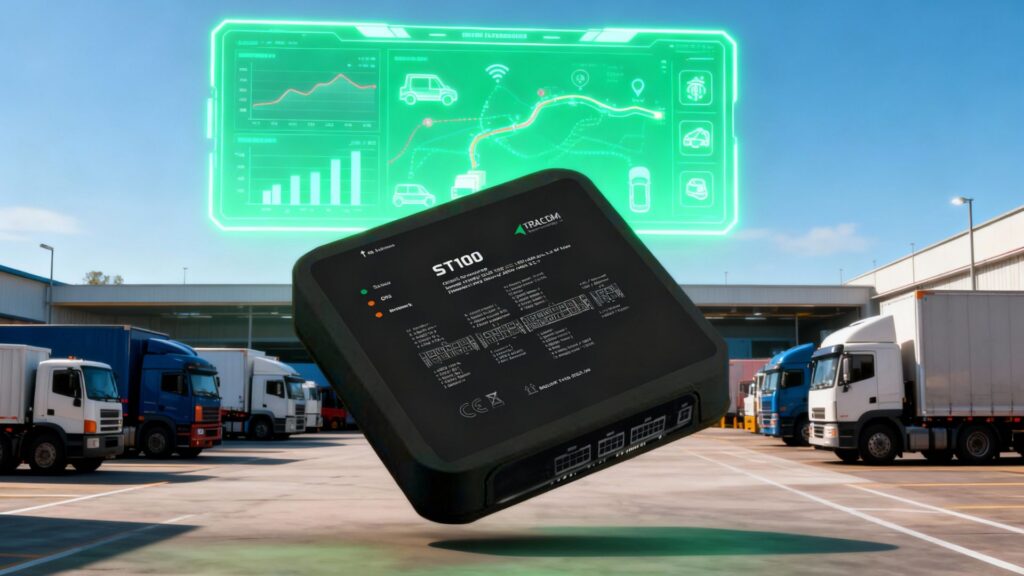
Choosing the right GPS tracking hardware determines how much visibility, accuracy, and operational control you can actually achieve across a fleet. Device capabilities vary widely by installation method, data-reporting model, and integration depth.
This guide explains the main different GPS tracker types used in fleet operations, what each type is best suited for, and the shortlist of features that matter most when reliability and security are non-negotiable.
What are GPS tracking devices and why they matter?
A GPS tracking device is an electronic unit installed in a vehicle or asset to monitor location and activity. For fleet operators, trackers are decision tools that reduce operating costs, improve driver accountability, and strengthen asset protection.
Fleet-grade tracking typically supports:
- Real-time visibility of vehicles, routes, and utilization
- Driver behavior monitoring (speeding, harsh braking/acceleration, excessive idling)
- Route optimization and faster response to delays or exceptions
- Fuel and maintenance cost reduction through better operational control
- Theft deterrence and faster recovery via tamper-aware tracking
- Optional diagnostics and vehicle health insights via OBD/CAN integrations
GPS tracking is widely used in logistics, delivery, construction, passenger transport, rental/leasing, and other operations where downtime, misuse, or inaccurate location data creates real cost exposure.
If you’d like expert help choosing the right type for your fleet, Tracom specialists are ready to guide you.
Read also: How to choose the best fleet telematics device
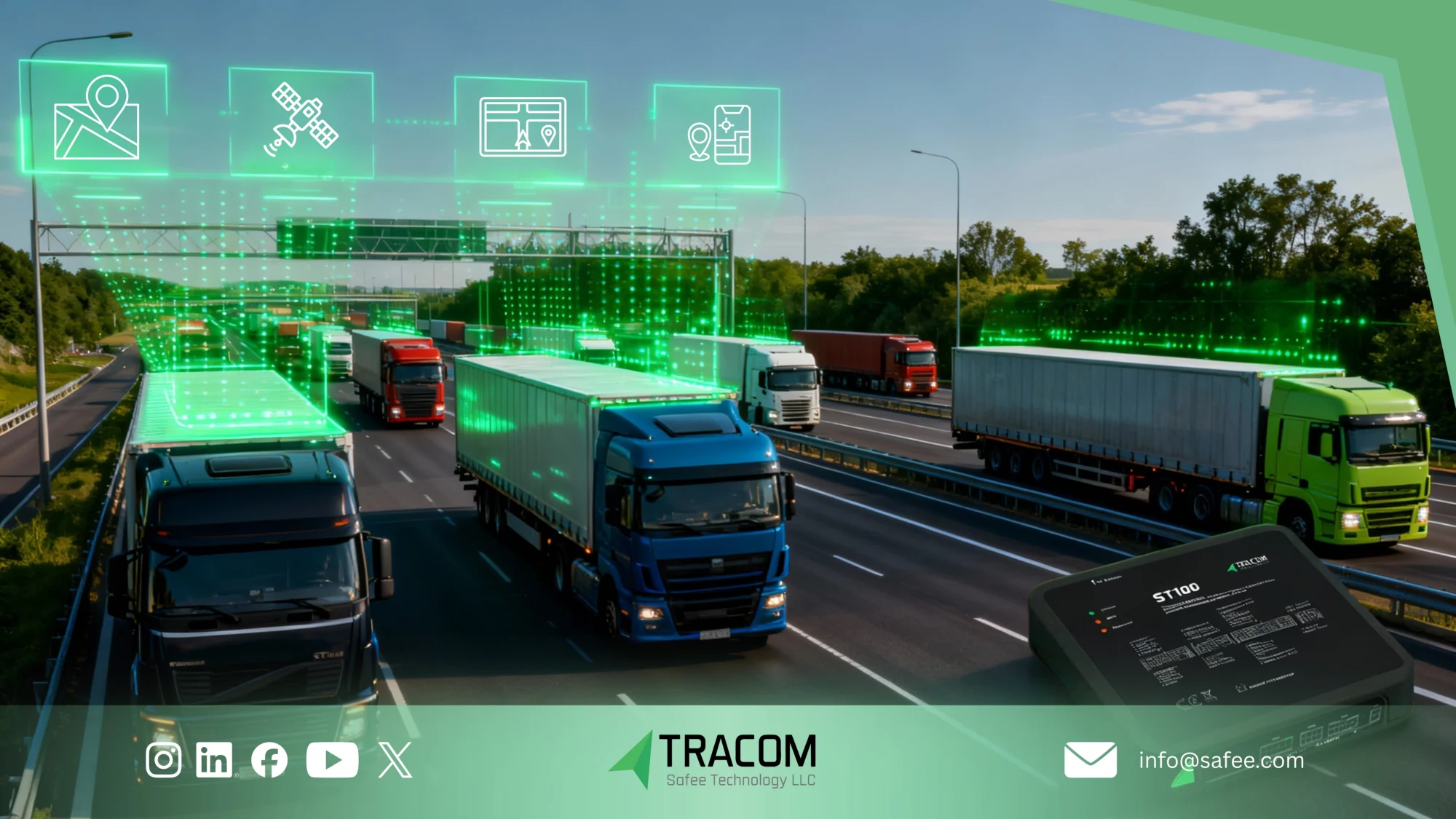
Types of GPS tracking devices
In practice, device selection comes down to two dimensions:
1) Types by Installation and Power
Portable (Battery-Powered) Trackers
Best for:
- Temporary vehicles, contractors, rentals, or movable assets
- Short-term tracking where fixed installation is not feasible
Trade-offs:
- High flexibility and rapid deployment
- Generally lower concealment and security than hardwired options
- Battery life and recharge cycles must be managed
Hardwired Trackers
Best for:
- Commercial fleets requiring continuous power and long-term reliability
- Operations needing concealed installation and stronger tamper resistance
Trade-offs:
- Most reliable option for uninterrupted reporting and security
- Supports ignition status and deeper telemetry with the right interfaces
- Requires professional installation in most cases
OBD II Plug-In Trackers
Best for:
- Fast rollouts across many vehicles
- Fleets that want basic diagnostics with minimal installation effort
Trade-offs:
- Plug-and-play activation and easier reassignment between vehicles
- Access to OBD-derived engine data (varies by vehicle and device)
- Less concealed than hardwired devices, depending on installation approach
2) Types by Data Reporting Model
Real-Time Trackers
What it means:
The device transmits location and status updates continuously over cellular networks (e.g., LTE/GSM).
Best for:
- Live dispatch and route adjustments
- Immediate alerts (speeding, idle, unauthorized use)
- High accountability and rapid response operations
Considerations:
- Requires dependable network coverage along routes
- Ongoing connectivity costs may be higher than passive-only solutions
Hybrid Trackers
What it means:
Real-time reporting when coverage exists plus onboard storage to backfill data during low-signal periods.
Best for:
- Mixed coverage routes (urban + remote)
- Compliance logging where gaps are unacceptable
- High-value assets requiring maximum data continuity
Considerations:
- Typically higher cost and more configuration complexity than passive trackers
Passive Trackers
What it means:
The device records trip data locally and uploads later, rather than providing continuous live visibility.
Best for:
- Basic historical route analysis
- Cost-sensitive use cases where live intervention is not required
- Very low-coverage environments where live reporting is impractical
Considerations:
- No live alerts or real-time response during trips
- Operational insight is delayed
To find the best type for your fleet’s routes and coverage areas, book a consultation with Tracom today.
Read also: Top GPS vehicle tracking devices for reliable monitoring
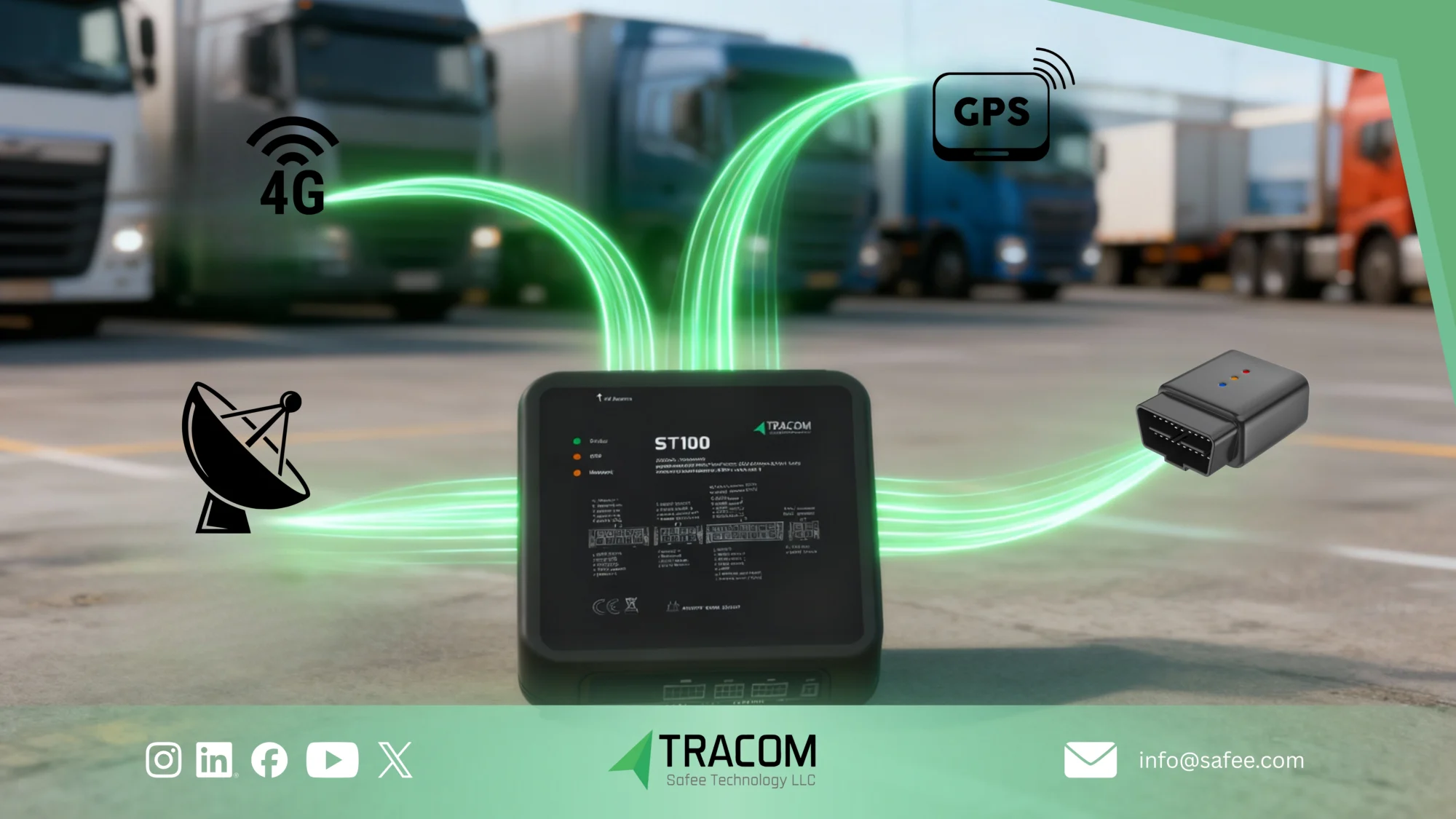
Key features in GPS tracking devices
Beyond device type, fleet outcomes depend on a small set of capabilities that determine accuracy, uptime, security, and total cost of ownership.
- Multi-constellation GNSS support (GPS, GLONASS, Galileo, BeiDou, etc.) for stronger accuracy and stability
- Reliable LTE/GSM connectivity for consistent reporting and alert delivery
- Onboard storage to prevent data loss when coverage is limited
- Vehicle data interfaces (OBD II, CAN-bus, RS232) if diagnostics and deeper telemetry are required
- Security controls: tamper/unplug detection and jamming detection
- Rugged design and environmental protection (e.g., IP rating) for harsh operating conditions
- Over-the-air (OTA) configuration and firmware updates for scalable maintenance
- Configurable reporting frequency (including high-frequency reporting for sensitive operations)
If your fleet requires high-performance tracking with advanced diagnostics and real-time precision, explore the full capabilities of the Tracom ST100—built for the demands of modern fleet management.
How to choose the right GPS device for your fleet?
- Installation constraints: Plug-and-play (OBD II) vs professional hardwired installs for security and reliability.
- Visibility requirement: Live visibility and alerts (real-time/hybrid) vs historical reporting (passive).
- Route coverage: If vehicles operate in low-signal areas, prioritize hybrid devices with onboard storage.
- Data depth: Location-only vs diagnostics and telemetry via OBD/CAN/RS232.
- Security risk: If removal/theft/interference is a concern, prioritize concealed hardwired installs plus tamper/jamming detection.
- Operating conditions: For harsh environments, choose rugged, IP-rated fleet hardware.
- Scale and maintainability: For large fleets, OTA configuration and updates reduce downtime and overhead.
Why Tracom / ST100
Tracom devices are engineered for fleet realities: continuous operation, reliable connectivity, tamper awareness, and vehicle integration where needed. The ST100 is designed as an enterprise-grade unit for operators that depend on accurate data.
ST100 highlights (fleet-focused):
- Multi-constellation GNSS with 47-channel tracking for stronger positioning stability
- LTE/GSM connectivity for dependable real-time reporting
- OBD II / CAN-bus and RS232 support for advanced telemetry and diagnostics
- IP56-rated protection for harsh environments (dust, moisture, vibration, heat)
- Tamper/unplug detection and jamming detection to protect data integrity
- High-frequency reporting options plus OTA configuration and firmware updates
If you’re ready to equip your fleet with high-performance, future-ready GPS hardware, contact Tracom today and speak with a fleet solutions expert.
FAQs about Types of GPS devices
1. GPS vs GNSS vs GLONASS: what should fleets choose?
GNSS is the umbrella term for satellite navigation systems; GPS and GLONASS are two constellations. Multi-constellation devices generally improve accuracy and stability.
2. Is sat nav the same as a fleet tracking device?
No. Sat nav is for navigation. Fleet trackers transmit operational data (location, status, alerts) to a management platform.
3. Hardwired vs OBD II: which is better?
Hardwired is typically better for concealment, security, and long-term reliability. OBD II is typically better for speed of deployment and easy reassignment.
4. What are telematics devices?
Telematics devices combine positioning with vehicle data (e.g., diagnostics and driver behavior signals) and integrate that data into fleet management software.